Unrelated Update: My current Fantasy Book “The Skyship of Truskal” is basically finished. Mostly just final clean-up, finalising book covers, and all that jazz.
Also, I’d like to extend my condolences to the US.
It is time
We have finally reached the good stuff. The meat. The 1st Edition Base Set Charizard. This is what got me so excited about this idea – Because it brings both Relativities together. That’s right. My idea explains why Special Relativity is the way it is. (Except Time, but I think I have that covered. Maybe … possibly, or not, I don’t know. But space is all good).
So Let’s get into it.
Recall me mentioning that an orbiting planet would experience a leading edge gravitational pressure, but because the orbit speed is so slow, that pressure can be ignored? – Well. What if it can’t be ignored?
The thing is. Gravity and Light have something in common. They both follow the same speed. Light takes about 8 minutes to travel from the Sun’s surface to Earth. But the interesting thing is, if by some mysterious event the Sun suddenly disappears we would still feel its gravitational effects for 8 minutes as well. For those 8 minutes, we would continue to receive sunlight and continue to orbit around where the sun was. Only after those 8 minutes are up would all hell break loose.
From this, I can’t help but think that Light is connected to the Gravitational Field as well (might explore that down the track). But there is also another important factor here. That means the gravitational field wouldn’t instantly snap back to normal, it would “decay” so to say. That stretched Bell Curve:
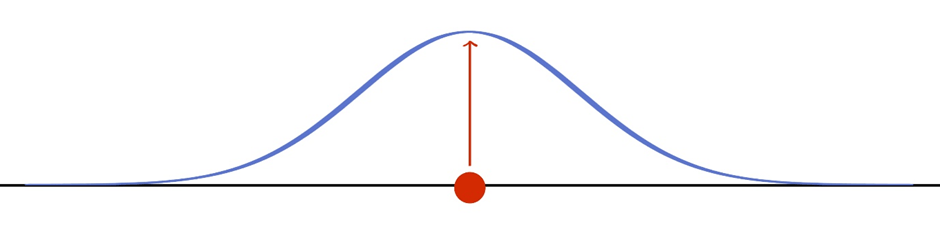
Figure 1: Our Usual suspect
Yeah, that one. Would return to normal at a rate at (and/or related to) the speed of light. (Side note: if this is so, then would that mean the sudden absence of the Sun would be felt with a gradual decay in gravitational influence, rather than a sudden absence?)
So, this means the Gravitational Field isn’t instantaneous. It needs time to react. For a moving object, that field would be stretching ahead of it as it moves, and dropping back to normal after it passes. Normally the rate of rising and falling is so fast it has no effect on the the moving object. But if that mass was moving at relativistic speeds (approaching c (the speed of light)) and the Gravitational Field, is also limited by light speed, then that mass will warp the gravitational field with it. There will be a bunching up of the field in front of it due to it not being able to react fast enough, while experiencing a delay returning to normal as it passes.
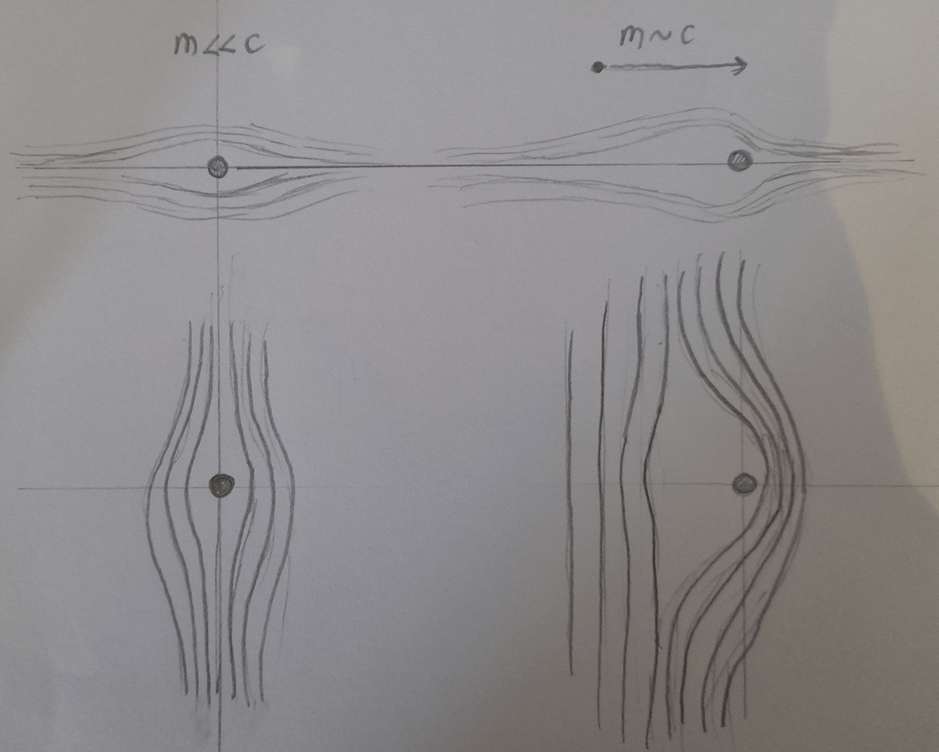
Figure 2 Mass at normal speeds (left) and Mass approaching Speed of Light (right)
So, now we have this “pocket” forming behind the mass due to the field not being able to return to its neutral state fast enough. The faster the mass is, the larger that pocket becomes. The interesting thing is, this pocket means there is more gravitational pressure than when the mass is moving at non-relativistic speeds. Yes, that’s right. We have relativistic Mass … That pocket is a phantom mass, making the real mass appear more massive than it actually is.
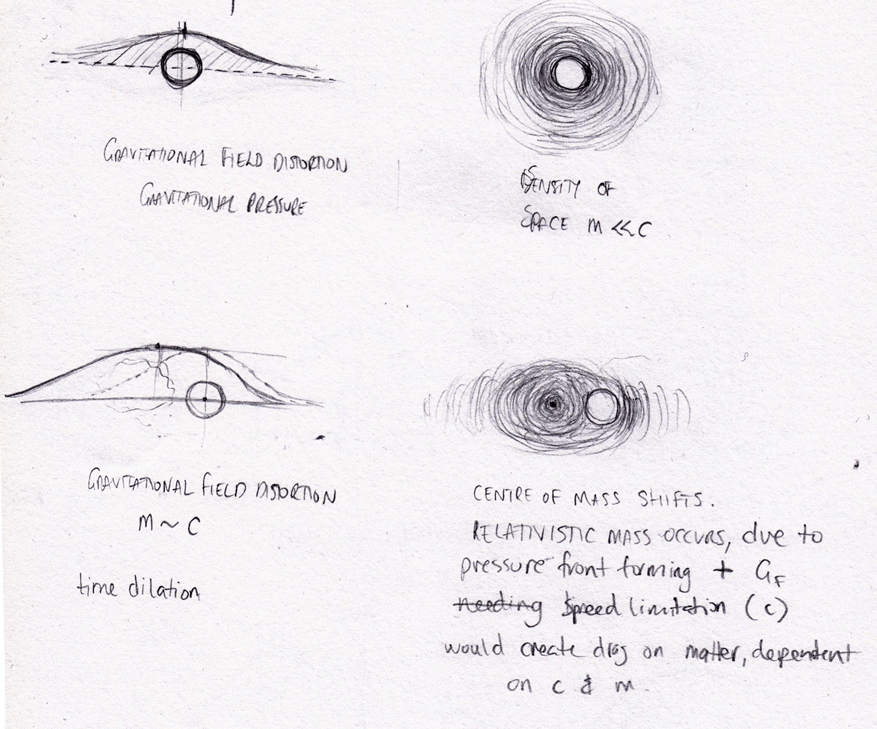
Figure 3 Interpretation of how a phantom mass might appear
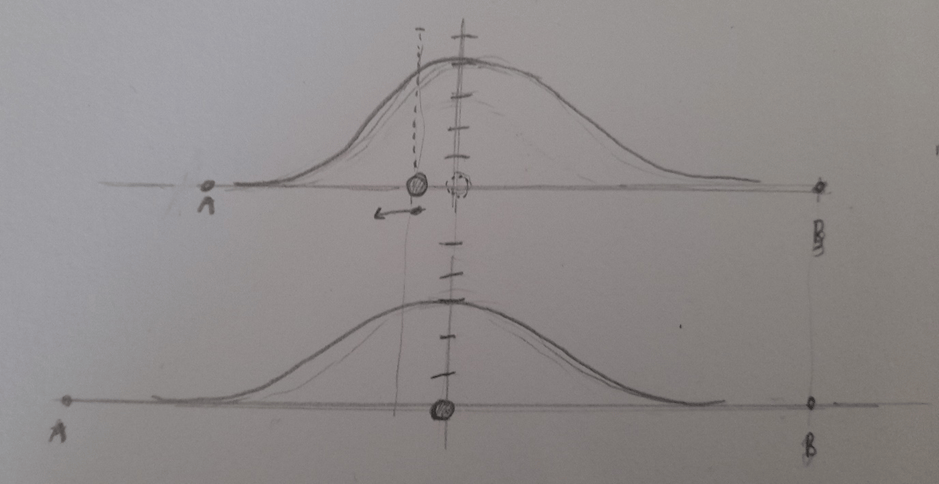
Figure 4 Mass approaching c (top) and, Mass moving at normal speeds (bottom)
This same hypothesis also satisfies the Lorentz Contraction. In special relativity, an object will appear to shrink from an outsider observer’s perspective, but only in the direction of motion. And as we can see from Figure 2 the Gravitational field stretches in one direction.
Anyone who studied Figure 4 might’ve noticed that Points A and B are at different distances in the top and bottom pictures. This is deliberate. Because the change in the gravitational field is really, just my way of saying it’s “Space” and that warping due to the presence of mass will physically distort the distance as well, scrunching it up a piece of material, bringing the ends closer together. From the point of view of the relativistic mass, Point A is closer!
On a side note. This distortion applies to Mass regardless of movement. The presence of mass shifts space from the flat – direct line of sight – to a hilly expanse. Except the hills aren’t physically up and down, but a shift in gravitational density. That density makes objects closer than they would be without the presence of mass. Mass causes space to contract!
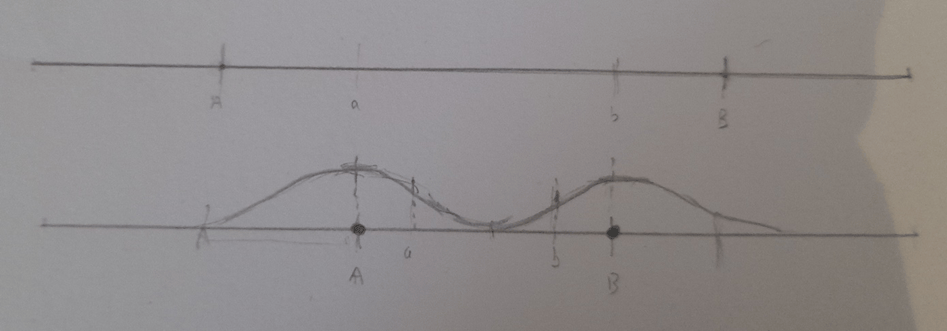
Figure 5 Distsnces between A and B with (top) and without (bottom) mass
Could this also apply to Time?
Okay, I’ve tried to nut out what time is over the (on and off again) ponderings of this chapter, and I’m no closer. But I do have a “maybe” way of picturing it in frame of Special and General Relativity (like much of my ponderings this is probably just how it is, and nothing new to those who actually know this stuff – (or just wildly wrong altogether)) but for the sake of chasing my idea, it fits.
I’ve approached it as simply as I could. Both the Gravitational Field and Time are bound. Like Momentum. And as one shifts so does the other to conserve the system.
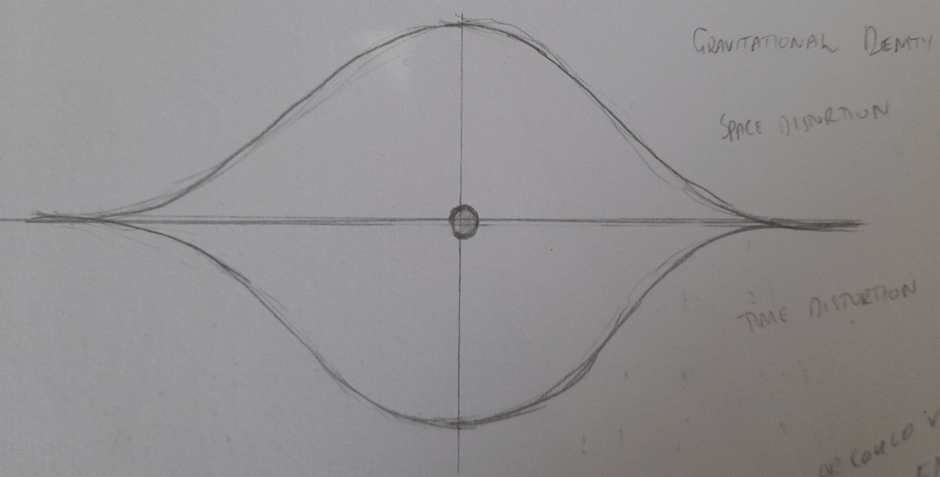
Figure 6 Distortion caused by mass. Gravitational Density (top bell curve) and Time Density (bottom bell curve)
As a Mass stretches the Gravitational Field from its neutral ground state, so does mass stretch a time variable from its neutral state. With each gravitational field curve we create, there would be a corresponding “time curve”.
So with the presence of mass, the gravitational field tries to return to normal, creating a gravitational force. AND at the same time, something like a time modifier is exerting time energy, I guess the way I picture it is that it’s like time becomes more viscous, slowing the passage down through that space. Perhaps we shall call it Time Density? Gravitational and Time Density are interlocked, perhaps even the same thing.
The larger the mass, the greater the Gravitational Density, and the greater the Time Density. And this also works with Special Relativity. We can use the exact same images for the Gravitational Field for, I guess, the Time Field (? Are we calling it that now, lol?)
And therefore, the increase in a particle’s velocity, towards light speed will result in a “phantom” time event, just like with mass. Time will slow beyond what its mass should say it will slow to, because the Gravitational Field is stretching and therefore both gravitation and time density are increasing.
Side Note:
~ This whole imagining these two fields makes me think of them in the same way as a photon’s Electromagnetic Field, with the Electronic and Magnetic fields represented 90 degrees from each other. The Gravitational and Time Fields can be seen 90 degrees from each other (as a visual picture, one can’t say it works mathematically) ~
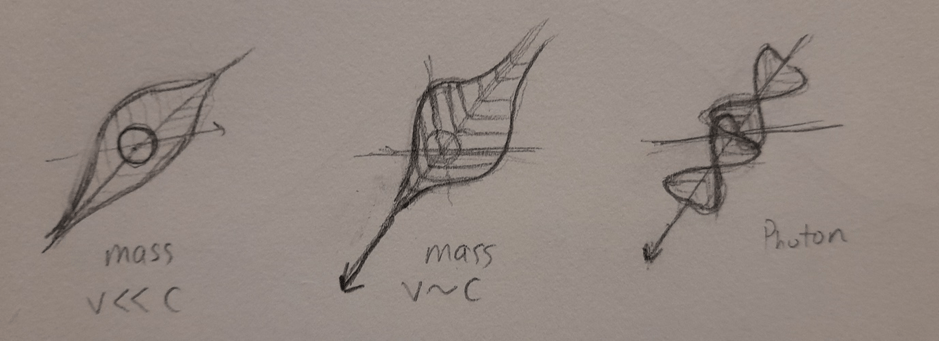
Figure 7: Left and Centre: Mass with Gravitational and Time Fields. – Right: Photon with Electric and Magnetic Fields
My maths-illiterate brain is lamenting right now. I feel like this is right on the cusps of something. But I’m too ignorant to even attempt it. I can [square bracket] notate where I think a start might begin but this will probably be utter nonsense too.
This function f(x) (where x would be mass) would produce something in relation to [Gρ] is gravitational Density, [Tρ] is Time Density and [S] is Space.
Review:
The Gravitational Field is limited to the Speed of Light “c” just like photons are. And any distortion will decay relative to c.
Gravitational Density increases as a Mass approaches Light Speed due to the Light Speed limitations of the Gravitational Field. This creates Relative Mass.
The Gravitational Field must conserve its energy, just like momentum. A change in Gravitational Density will also change something I call Time Density.
Time Density slows the passage of time in the presence of mass.
Just like Gravitational Density, time Density increases as mass approaches c.
The stretching of Gravitational Field contracts space. This contraction is also increased at speeds close to light speed.
All three: Gravitational Density, Time Density, and Space contraction are all connected and warp together.
Question/Things to ponder:
I can’t help but ponder if the gravitational field, itself, would create a drag factor on a relativisticly moving mass particle. Which begs the question. Would relativistic mass slow down in space? … Newton’s Laws state that an object will keep moving unless a force is applied to it. And space, famously, has no atmosphere to slow an object … but could the Gravitational Field itself cause drag?
If there is a gravitational field drag, then does that mean mass has a second “maximum cruising speed” limit which it can travel without losing speed? And would that apply to particles? Could this explain why Neutrinos don’t seem to slow down? Or how orbiting black holes merge? Eta.?

