If you’ve come into this blog update blind then it might not make any sense at all. You’re welcome to explore the “physics” menu tab. Which has a fair chunk of my early ideas. (this is a continuation/exploration of that)
Basically, my Hypothesis is Gravitation isn’t an attractive force (like Newton’s law) and neither is it (in a sense) the curvature of space-time (like Einstine’s theory) but instead, a field permeates all of space and the presence of matter alters the field around it. The field though wants to revert back to its natural state (like a spring or a stretched lacker band) so it exerts a force on all matter. I call this field “the Gravitational Field Density” Gρ, and the force “Gravitational Pressure” Gp.
In this post, I’m going to explore an idea I’ve had several times over the years but never really was able to get far with it (it’s still wildly limited but that’s because the person writing this post isn’t really a maths nerd and has had a steadily decaying understand of physics over the years).
This side-door hypothesis is that the Gravitational Constant is the same thing as the Gravitational Field Density and that it is possibly not a constant at all, but either a subtle variable, or a field that has been slowly decaying as time goes on.
We know that Newton’s law of Gravitation works well for smaller scales but fails on the larger ones. But what if Relativity also fails on even larger scales? I’m talking galaxy levels and beyond. Currently, we have issues with dark matter, the universe’s expansion rate and missing mass. If I am correct and Gravitational Density is a variable (the Gravitational constant) it could account for all these things.
Seeing the Gravitational Constant as a decaying/variable Gρ could help explain:
- Missing mass in galaxies
- Rapid inflation of the early universe
- The accelerating expansion of the universe
The Gravitational Constant is 6.67×10⁻¹¹ N.m2/kg
Breaking down its units we get (m3/km)s2.
That is the inverted units for pressure in 3D space. This would suggest it is an anti-pressure. But what if it’s evidence of conservation of momentum? For a system to be conserved, then a balancing force must be exerted on us – thus this inverted pressure is actually the potential energy and is pushing down on us, thus gravity (for the explanation of Gravitational Pressure please refer to the Physics menu)
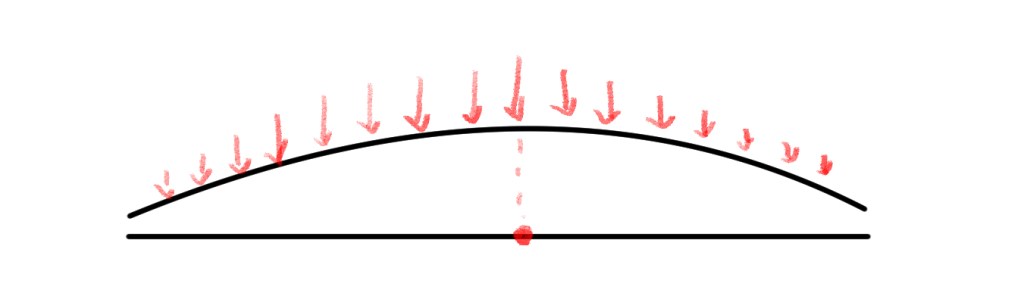
The more the gravitational field is distorted by matter then the more Gp is exerted on that same matter.
This could affect our universe in one and/or two ways.
- A stronger gravitational density early in the universe that steadily decayed over time and will continue to slowly decay as the universe ages.
- A variable gravitational density in relation to mass.
Gravitational Density Field decays over time:
Much like how space is expanding, so too does the field with it (perhaps they are part of the same thing) and that means over time the density decreases.
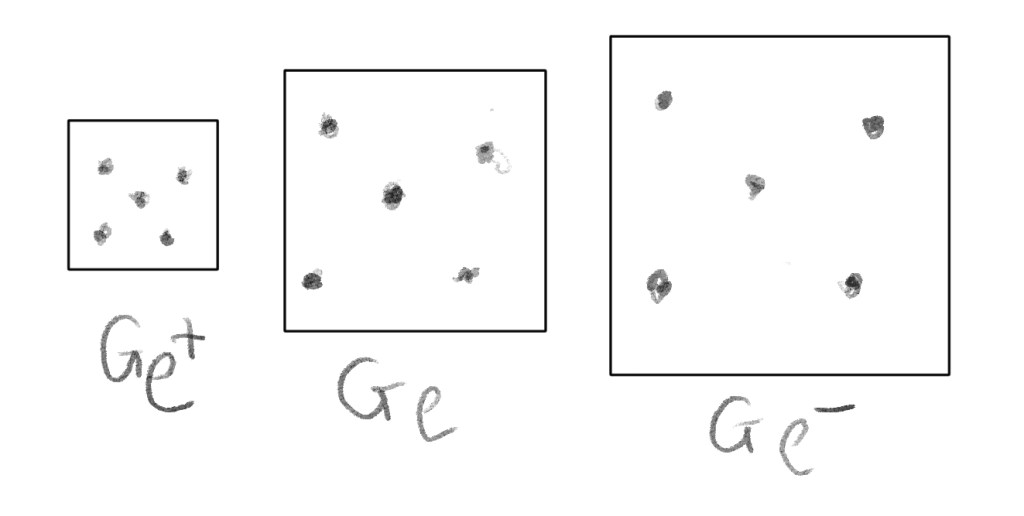
This means Gρ would have been much stronger than it is today. The clumping of matter would’ve been more efficient: allowing stars and galaxies to form more rapidly and possibly earlier[i]. Early stars built from the foundations of the BB could’ve been denser than once thought, and burned through their fuel faster. This could have also led to an early frenzy of black hole formation. The flip side consequence of this though is that it might also hobble star formation in the future universe. With an increased reliance on heavier elements to trigger star formation.
A galaxy’s forming radius would have been much greater than today. The decaying gravitational density would’ve deprived the outer edges of the stronger forces needed to maintain that star formation, sinking those regions into darkness.
And if the early universe field decayed quickly enough then perhaps the once thriving Star formation regions stopped before more complex systems formed. There is not enough gravitational pressure and/or orbital speed. Leaving the old outer edges too cold and slow to interact. And if these spaces were only active long enough to birth population III stars then all that might remain are the black holes and leftover elements from that brief time. And if the gravitational density was significant enough then perhaps these places are littered with black holes, making up the unseeable matter around us.
Another consequence is that the Swartzchild radius for the formation of Black holes would also be a variable. So BH formation in the early universe would’ve been easier than it is now. Could a reduced G contribute to the decay of BH?
Possible issues:
Would objects that formed inside the sphere of influence still orbit as that SoI decays over time? – I’m assuming that the gravitational pressure would decrease over time and this would allow star migration.
Expected mass (ignoring Dark Matter) around Galaxies is fairly accurate up to our position in the galaxy (~8kpc) … it’s when we look at the orbital velocities further out that the discrepancy creeps in, if Dark Matter is dominated by cold difuse gas and blackholes from pop.III stars further out then I’d assume inner part of our galaxy would have just as much Dark Matter present as well (need to properly study this)
Dark Matter extends to at least 230kpc (the visible side of the galaxy is around 15kpc) – perhaps it’s the sheer scale of the system.
Concerning Variable Gρ today:
This might be a long shot. I’m struggling to think it through. Many issues and unknowns pop up and my limited knowledge keeps running in circles. The gravitational density could be uniform throughout the galaxy and decay slowly over time. But it might also be faintly influenced by the amount of matter around it. If so it would require a lot of matter to make any real difference. But there might be a slight difference in the middle of galaxies compared to the outer edges. The more I think about it the less probably this is. But I want to express the idea just in case some other idea pops up down the line.
Reasoning behind variable Gρ within space frame:
One of our issues around the Gravitational Constant is that we can’t agree on its value[iii]. Our instruments have gotten better. And it has narrowed down the value, but it has remained stubbornly elusive. More than that, universities have made multiple measurements and achieved varying results. Instruments can’t seem to agree and the issues don’t seem to stem from the ways in which it is measured.
But if I am right and the constant is a conservation of pressure energy, then that measurement would also be affected by the presence of other bodies. The sun and moon affect our tides. I wonder what these experiments would show if they noted our current distances between these bodies and if the experiments were taken at specific times. Would they finally agree? – Probably not, but I wonder if someone has ruled that out.
[i] Haojing Yan et al 2023 ApJL 942 L9
[ii] A&A 418, 989-1019 (2004)
[iii] Li, Q., Xue, C., Liu, JP. et al. Measurements of the gravitational constant using two independent methods. Nature 560, 582–588 (2018). https://doi.org/10.1038/s41586-018-0431-5

