Subtitle: Another Gorram Post
Okay, I don’t mean to be annoying. But I feel I have to upload this here. It’s basically a revisit of all my previous posts, but I made a small correction and well … that changed everything. So all the old posts are actually wrong (well, this probably is too, but it’s updated wrong)
I have stopped posting the physics stuff, simply because the website design isn’t favourable to how I was approaching it. But I still want it out there. So I decided to upload to YouTube. But that’s been a slow and painful road (between these project just being time consuming, having to rewrite everything, add new content + my laptop being weak and old. It’s been … trying.
Anyways. So I’m posting the current script up here because I’ve only made two videos so far, and will need many more to cover everything. The following isn’t really made for reading, and I’ve only edited the first bits. The content further down is still a mix of newly written and the older wrong stuff. But the idea is there, so don’t have to worry if I get lazy and stop making videos.
This is all still just a working progress.
So over all, you can ignore this. It’s more for me than any potential readers. But I’ll edit and link the videos as I upload them just below this incase you’re interested:
***
The Script:
Part 1: https://youtu.be/jDSZXOQVt0E
Part 2: https://youtu.be/wGIheNjnHpg
***
Right off the bat, this is just “my” theory of gravitation, and I wouldn’t even call it a theory, most of it is more of a reimagining of the theories we already have.
And an added note after the fact: recently as I explored and wrote this script I stumbled across something very similar. To the point this might actually be already out there. But this existing I stumbled upon only covered a small amount of ground. If there is more out I’m unaware of it. So, I’m persisting as if it’s my own idea that nobody else has thought of, because I like living in my own delusional fantasy world.
And I want to share it anyway.
At the very least, what I offer is a different visual representation of gravitation that can help someone picture both Newtonian and Einstein’s theories in a more intuitive way. Another note: I apologise in advance for all my ramblings, I’m gonna try and keep this tight, but I tend to get … distracted.
My Hypothesis.
- Postulate that mass is the knotting or twisting of Space-Time. Each point of mass pulls a small fraction of space in towards itself.
- On larger scales, the accumulative effect of this knotting/twisting creates a density of space. The presence of mass creates a denser region of space around it.
- Therefore, spacetime isn’t curving ( like in relativity), nor are two bodies physically attracted to each other (like in Newtonian Mechanics), but is a density within the ST field itself. (picture something similar to magnetic field strength, but instead we’re dealing with something more like the thickness of space itself, which impacts the objects within)
Other possibilities in this hypothesis:
- The quantum level, the pulling of space into knots/twists causes a force like pressure. Space is in a heightening energy state and wants to return to its lower energy, unstretched space.
- Phantom particles are made from the natural vibrations of spacetime.
So in summary, I plan to explore how this idea can work for classical Newtonian and General Relativity.
But not just that. It also can be used to visualised Special Relativity and I have some thoughts on how that can look on the Quantum scale.
I realise this idea if probably super dodgy and not worth a real physicists time. and that it will most likely fall apart under scrutiny and on the mathematical level.
My logical thoughts could be flawed, or my original understanding of some physics could be wrong, or the mathematics that does match the theory falls short for observational reality.
And I accept that one thing could possibly have the whole idea crumble in upon itself. But it’s been fun to ponder none-the-less. And over the years I’ve learnt that conceptionally it fits well enough in places that makes it worth sharing.
And a final note: this is just a thought hypothesis. I lack the mathematical skill to even attempt to test it. So take that as you will. I’ve tried to follow logical conclusions, but if we’ve learnt one thing from studying physics, and that is – it’s not always logical.
Okay, onto the hypothesis:
The Quantum Level:
Even though this is just a pure hypothetical concept that I developed from earlier ponderings concerning orbits and relativity, it does provide a foundation that everything else builds upon. So basically, I came up with the large scale stuff first, before pondering how that might work on the quantum scale.
Everything – this whole crazy idea – centres around the behaviour of the space-time field.
And that field is something that permeates all of space. It sets the limit on everything. The electromagnetic spectrum is the propagation within this field, revealing the uttermost top velocity that can be achieved.
We know that all matter is energy. It’s where we get the famous E=mc2 equation. The mass times the speed of light squared.
(Everything we have is made up of empty space)
But what is that mass? Matter as we know it is made up mostly of empty space. With the largest concentration at its core. But we don’t actually understand everything about it, mostly we just know how it behaves. The less mass a particle has, the more complex its behaviour, where it looks and behaves like both a physical point object and a wave. Any observation of this particle than influences that behaviour. They are weird and mysterious, like Tom Waits’ music.
Pondering on this, I see mass as a vibration of the spacetime field, just like light is, but the difference is that it has somehow got caught up in itself. So instead of propagating through the field at c (like a photon does), it’s twisting in on itself.
I’m not sure how this would behave or look, but I usually picture it is a knot in the gravitational field or some kind of stable corkscrew-like vortex, or a harmonic resonance. For the purpose of this video I just think of it as a weird twisting/bound vibration of the fabric of space that can’t untwist (or has a probability (Decay) associated with it unravelling).
So this mean, Each fundamental particle is a kind of knot or bound vibration of the fabric of space.
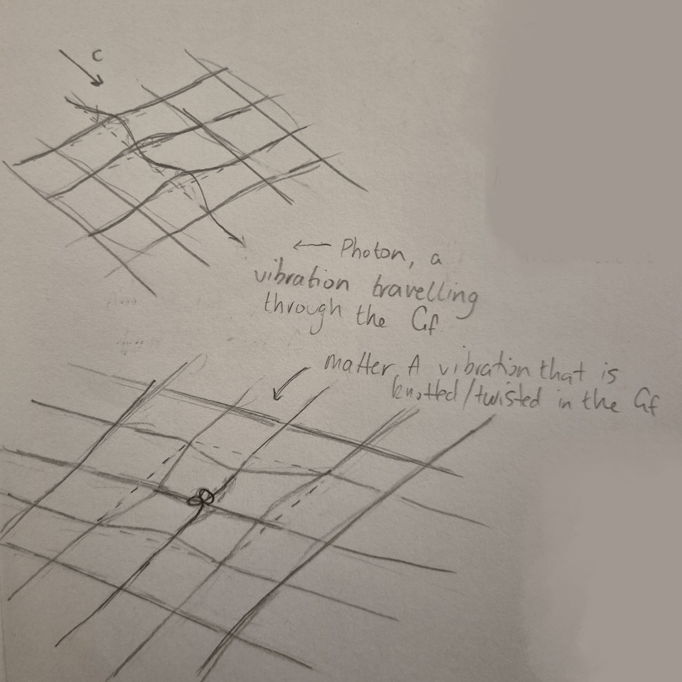
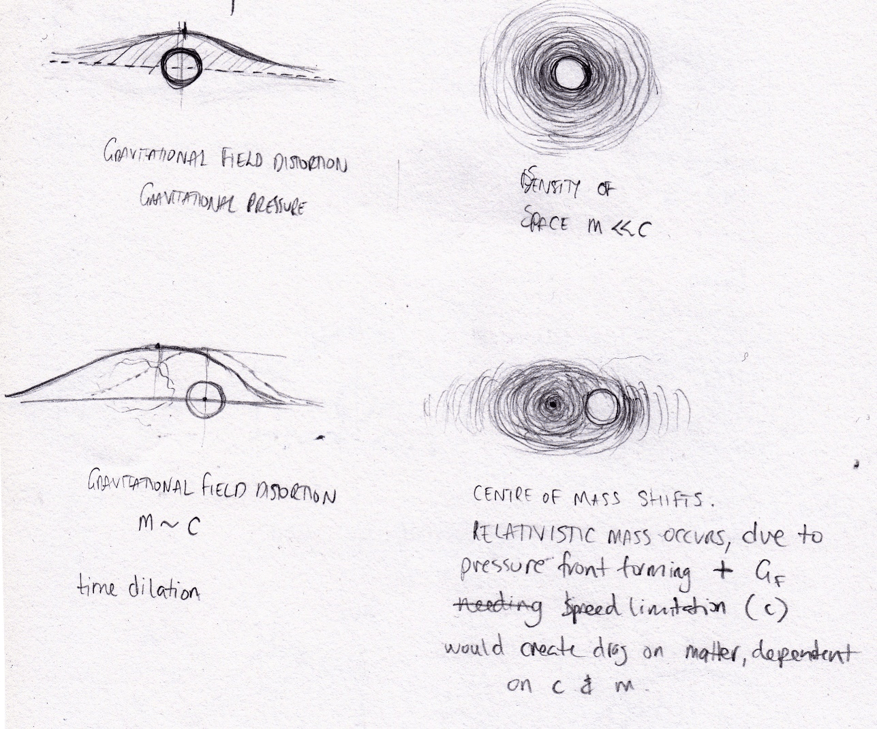
Figure 1particle behaviour in gravitational field
Side note: this led to my first discovery of how limited my humble bachelor degree was. from what I’ve tried to read and understand, this is the basis of Quantum Field Theory. That everything is made from vibrations. If there is more to it than that, it’s beyond me. And undoubtedly, as with all things with physics, there probably is more to it than that, and us mere mortals get the dumbed down version.
So, these knots, or twist are in the fabric of space itself and that’s what makes mass.
So, if you want a better visualisation of that. Picture a piece of string. Measure it’s length and then knot it. When you measure that length of string again, it no longer covers the same distance as when it was untwisted, it is slightly shorter. That string is still ultimately the same length, but the twist within has shortened its distance within space.
This is what I’m proposing that happens to Spacetime. Each point of mass is, in fact the twisting, knotting, harmonic, vibration of that space.
If we go back to the string. One knot won’t make much a difference in the measured length of space. It might not be measurable at all with the naked eye. But if we keep putting knots into it. Then we get an accumulative effect. That string becomes shorter and shorter.
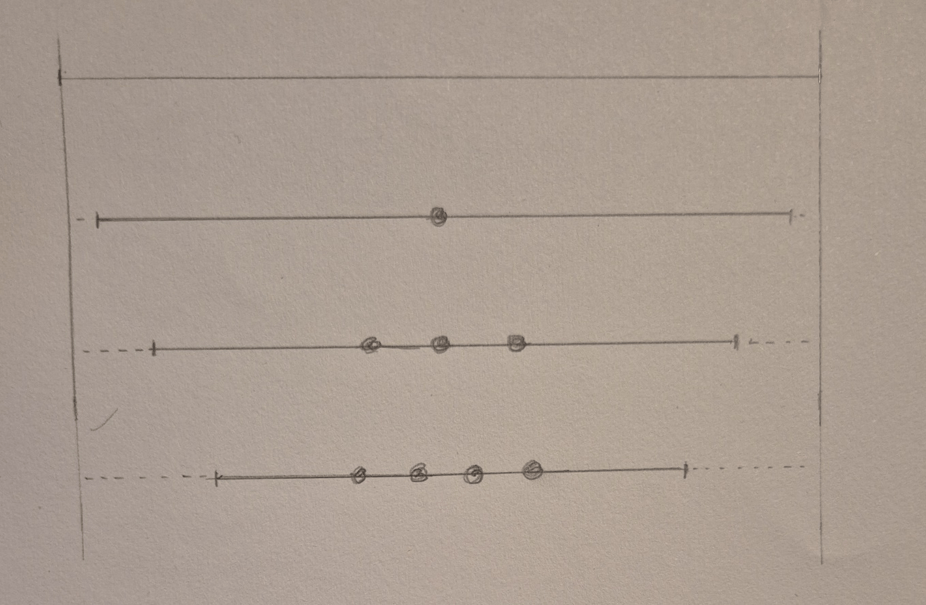
Side note. I have moved into a slight variation of this where the space isn’t shortened by stretched. but for the sake of keeping things simple I’ll stick with how I’ve shown it now and move to the other variant a little later on)
Into the Macroverse:
Can you see were I’m going with this? With one point mass we see the tiniest shortening of spacetime. So small that it’s inconsequential.
BUT if we add more mass. That shorting increases. And it keeps increasing as mass is added. All those countless knots of matter, pulling space adds up, and this creates a density of space. That field that should be a flat line, is stronger where mass is concentrated. Thus … our effects of gravitation.
We can now look at it as the density of spacetime.
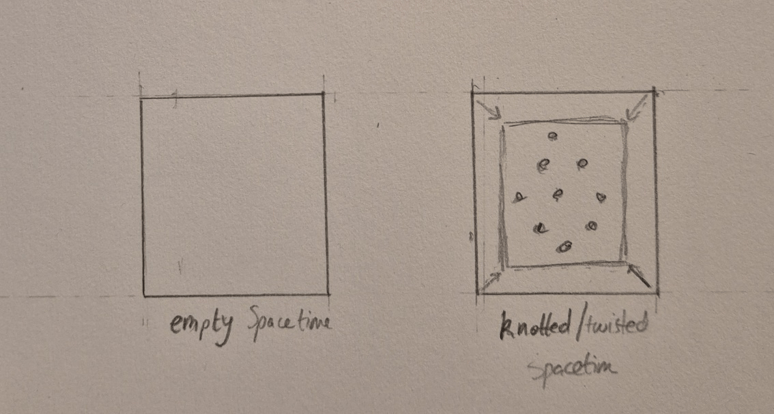
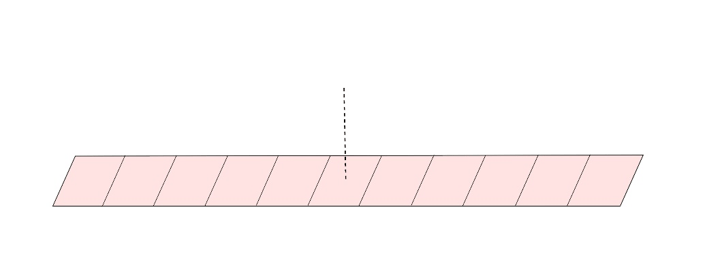
Figure 2 Gravitational Pressure without Mass
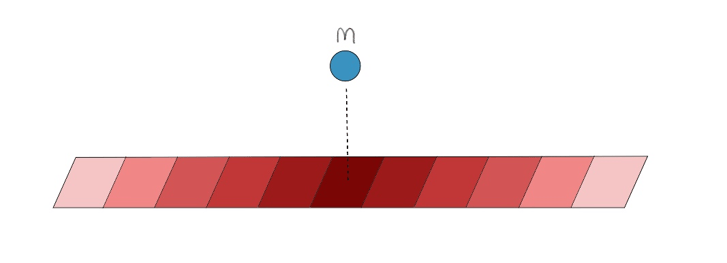
Figure 3 Gravitational Pressure With Mass
So space would be denser where there is more mass. And that density would peak at the masses core and decrease as one moves away from it.
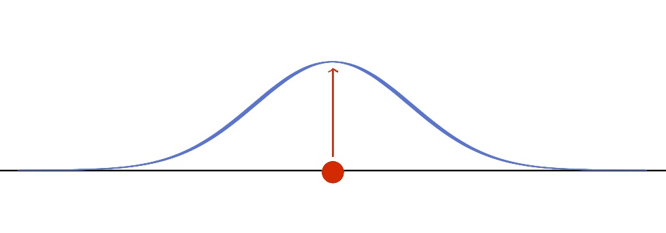
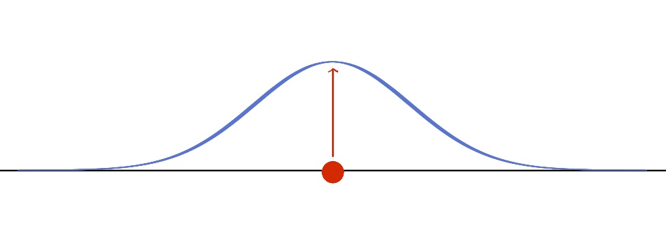
So if we imagine it visually. We have this very simple representation graph of a large Mass (could be anything, but let’s pretend it’s a sun or planet), and the gravitational density it exerts around it.
The bell curve represents the density versus distance. The x-axis being the distance. With the red mass being the point of interest. And the y-axis being the Spacetime density.
This space density then creates a potential energy around it. (shown in green)
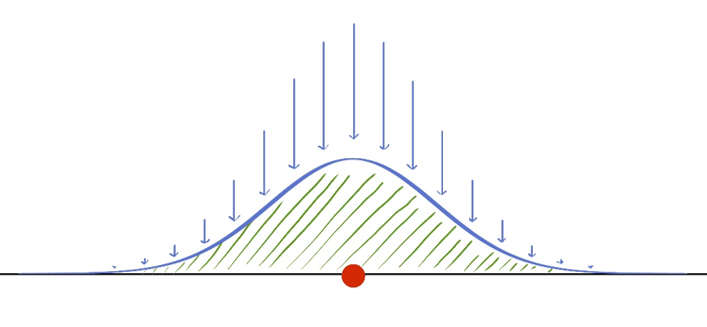
So our theoretical red mass in the middle has a lot of potential energy in its sphere of influence. A potential gravitational energy one could say.
An important note with this space density, it is a heightened state. This density has caused the ST around it to stretch, due to the matter knots pulling it inwards. But this act is like a spring and the ST wants to return to its normal state. Because of this, there is a gravitational “pressure” build up where ST density exists. ST is trying to return to its neutral low energy state due to the conservation of energy.
The question is, what would that look like. Now this is purely speculation on my part, and could be horribly wrong, so just ignore if that’s the case. But what if that’s the roll the Gravitational Constant plays:
The Gravitational Constant:
So, I’m going to step back a bit, and propose a question.
And that question is. What exactly is the Gravitational Constant? I don’t think anyone has ever explained exactly what it is. And I couldn’t find anything on the internet. People say, it’s just a constant. But constants come from somewhere, they mean something.
The Gravitational Constant is 6.67×10⁻¹¹ N.m2/kg2
And If we look at the units we have this:
So here’s the notation:
N is the unit for force, it’s just called the Newton. It means the amount of force required to shift a one kilo object one meter per a second squared.
If we switch the N with its fundamental units we can expand G to:
(refer to old posts)
If you’re not aware about units this is the same as what we just had, it’s just expanded out. The N really, just makes things look neater. We can then add them together or cancel them out to give us the most basic units:
(refer to old posts)
our reimaged units are now: meters^3 per kilogram and per sec^2
So we’ve broken the units down again. What are these units? Well, the second is easy. It’s the time-factor, taken from the Newtonian part. The first part though is interesting. These are the units for density, but reversed. Applying the time factor implies this is a force-like state that is constantly exerted on spacetime. So basically this looks like anti-pressure in 3 dimensional space.
But What on earth is anti-pressure? Is that even possible?
I guess instead of a force pushing perpendicular against an object, like in the traditional definition, it is an opposing force.
But if we look at it from spacetime perspective it just looks like normal pressure.
But if that’s the case, why would space exert this seemingly opposite-pressure at all?
Well, if the gravitational field lines are stretched then it’s a given they’d rather be un-stretched (yes that’s a technical term) – and given every reaction has an equal and opposite reaction, that would suggest there is an opposing force trying to stop that stretching in the first place. pulling back, the Spacetime field is exerting pressure in the normal sense of the word. This would appear like anti-pressure from our perspective but is like normal pressure from the gravitational field perspective.
So while the field is being stretched out due to the twists and knots within it, the inward “anti-pressure” is trying to bring it back in, writing this does make it sound very similar to Hooke’s Law aswell … and so, that’s what I think G is. It’s the elasticity of space trying to return to normal.
Chapter 2: the Two Body System:
In the previous video we explored the foundation of my hypothesis. How mass influences the space around it, and a possible quantum explanation of why.
This video I will go deeper and explore the two body system.
Okay, so we have established that a mass will stretch spacetime, changing the gravitational density around it.
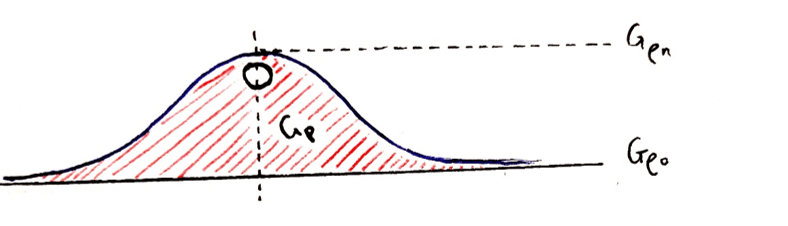
Just a note, this is an old drawing I haven’t bothered to correct, but the Gp would be the Gravitational Potential Energy.
So let’s try and picture what this gravitational density would look like.
The gravitational density caused by mass will be even from all directions. If we look at our drawing we see that the density from the left side of the mass will equal the density from the right side. Okay, you have to assume my drawings are perfectly even, I’m too lazy to make new ones, but don’t worry, I have a few better ones lined up.
So what happens when we introduce a second mass?
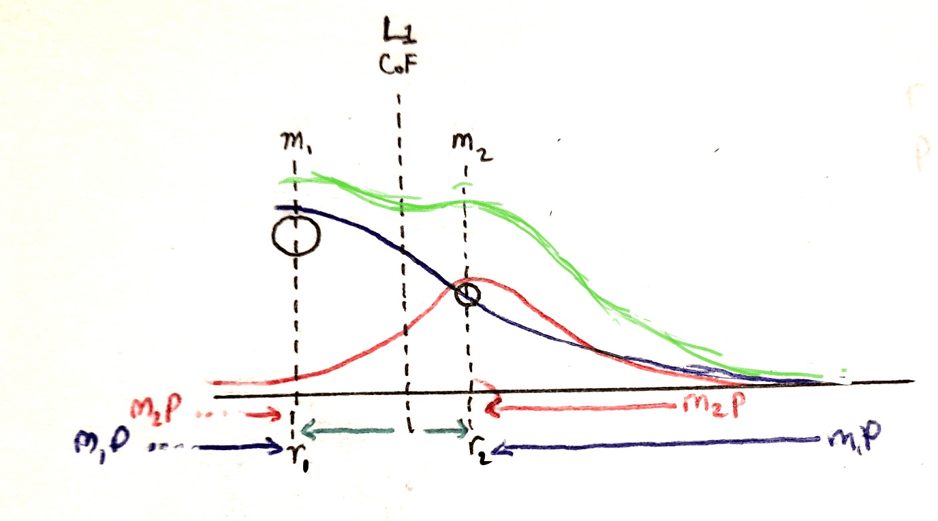
Figure 4: Original drawing. I’ve made up a digital one to use below, but both aren’t up to scratch. But hopefully they get the idea across.
If we have two masses then spacetime will stretch from both. Both of these bodies will be independently influencing the space around them, creating a higher spacetime density.
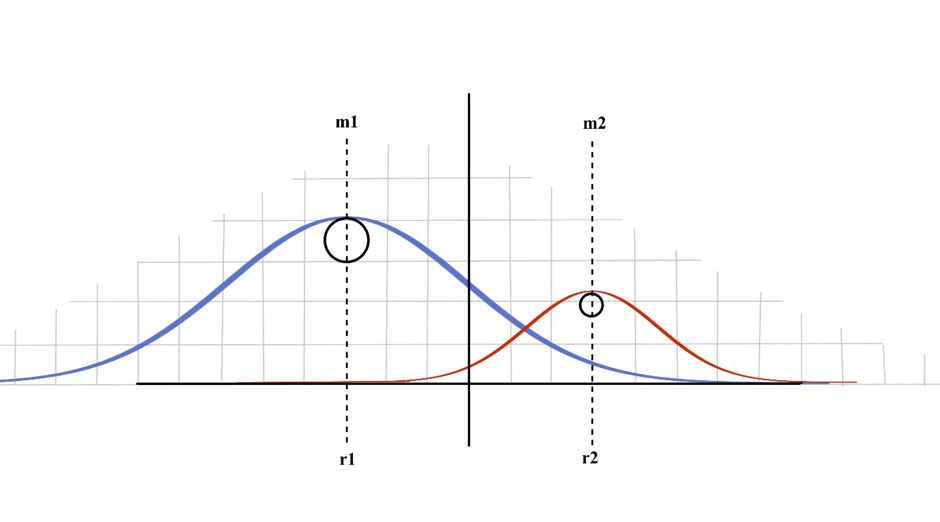
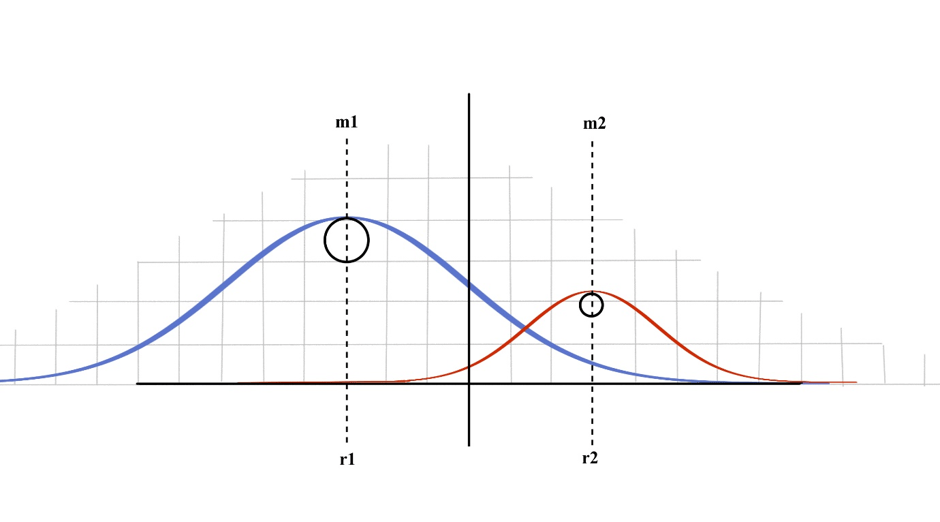
If these masses are by themselves then the field would be even on all sides for that mass. (blue for the larger mass, red for the smaller). (note, just ignore the arrows, that was from a previous idea I’ve since dropped, and it’s too hard to remove them, so they remain.
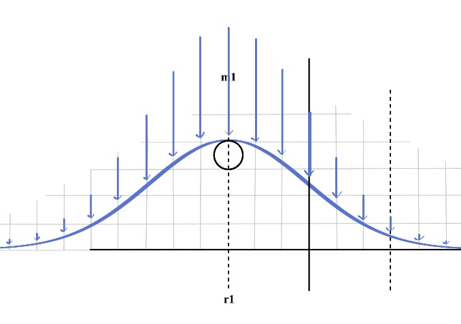
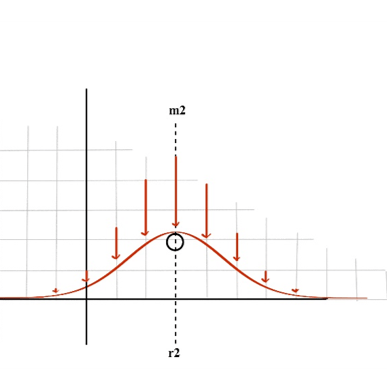
But if both these masses overlap then the resulting gravitational field will warp around both. Combining the densities of both to produce a new shape. Which is what we expect with gravity — It’s accumulative.
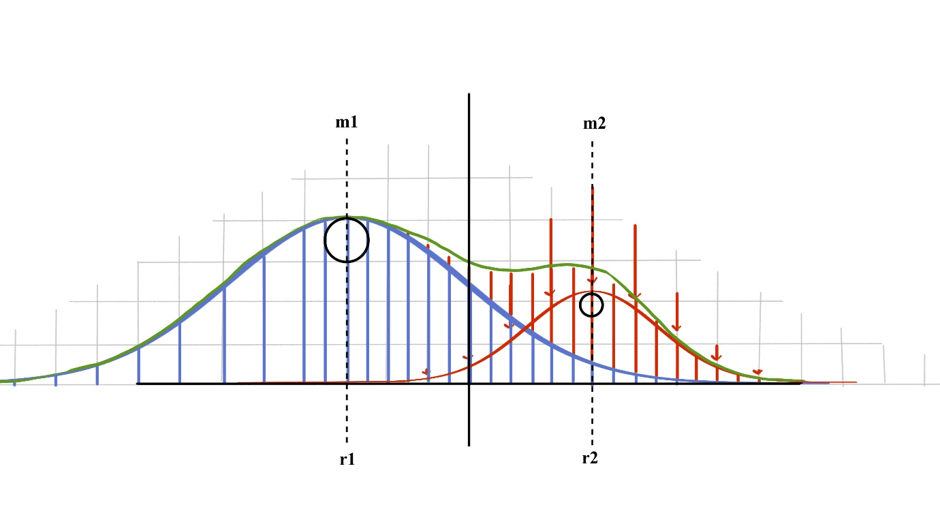
Having more than one body within a system changes the entire dynamics of gravitational density. Thinking about this logically, one might assume my theory would push these masses away, not draw them together, but you might be surprised at what happens.
The smaller mass (we’ll pretend that it’s a sun/planet system, even though this looks more like a binary star system [If it was better scaled the second mass would being MUCH smaller if it was a planet, but it’s easier to describe this way, keeps things a little less confusing])
The planet is now caught in the Sun’s sphere of influence (the density area around the planet has significantly stretched from what it would be like if the smaller mass was by itself).
But everything isn’t completely dominated by the larger mass. The planet still has its own region. Like an island within the larger system. The larger the smaller mass is the larger that island would be, and the smaller it is, the smaller that island.
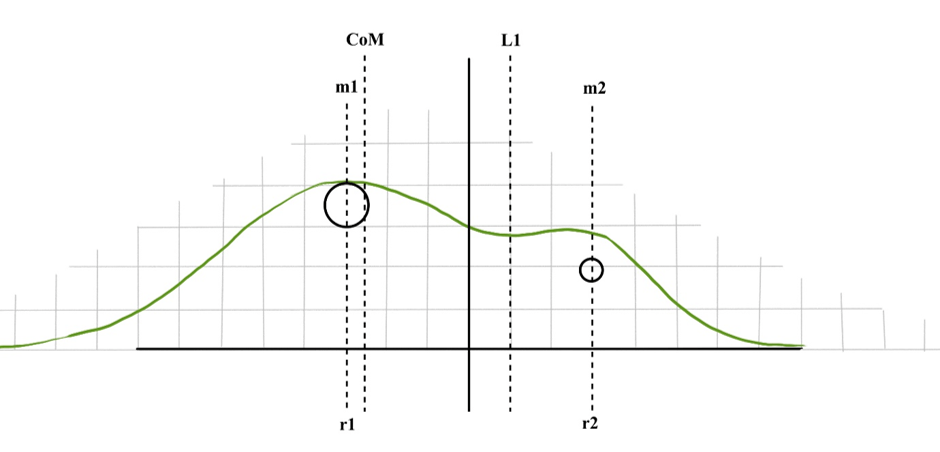
Returning to the graph images. We no longer have a nice, clean bell curve for the stretched space. It is unbalanced. The densities on either side of both masses will no longer be equal. And this will affect the system.
The new curve also shows us two things. It shows the smallest shift of the Centre of Mass. Both bodies would be drawn to this new point.
And the second is the small dip between both bodies near the smaller mass. This is the spot where the gravitational pressure between the two masses is equal. Anything sitting here would feel equal pull towards both masses and therefore wouldn’t be drawn to either … This is called the first Lagrange Point.
Now here’s the interesting thing. In three-dimensional space anything floating around will be subjected to both masses. Even when that object is well in the sphere of influence of one mass, the pull from the other will still be felt. No matter where they are, the faintest of interactions between both masses will still exist.
EXCEPT, and this is so important, in direct line between both bodies. On a one dimensional line the influence is determined by which side of the Lagrange point the body sits.
So here’s a picture for both bodies and the resulting Gravitational Density felt by them.
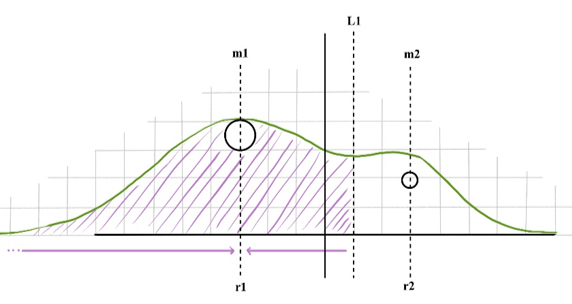
Figure 5 Gravitational Pressure felt by the larger mass
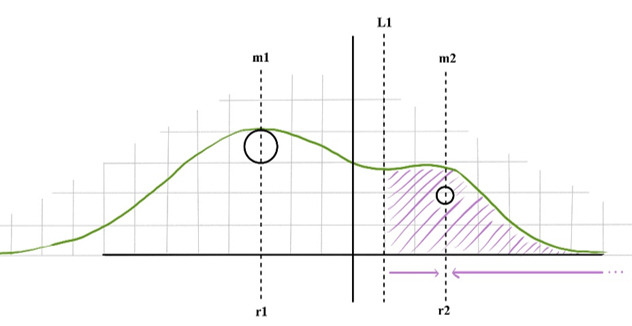
Figure 6 Gravitational Pressure felt by the smaller mass
The purple fill underneath the curved line is showing which side of the system the bodies would be drawn to if they resided in that space.
Another interesting consequence of this quirk is that both bodies are now cut off from part of their normal gravitational pressure on one side. What once was even and keeping everything firmly in the middle, now has a lower gravitational density in-between the two systems.
This results in both bodies experiencing an uneven pressure that draws them towards each other. just like in Newtonian Gravity.
I won’t add it here. But my limited maths skills has let me derive a relationship between all these bodies. It can be seen on my website, not that’s worth exploring. But here is the end product:
Now my maths isn’t great. I can’t derive formulas for the life of me. But I can express the systems in pressure and distance.
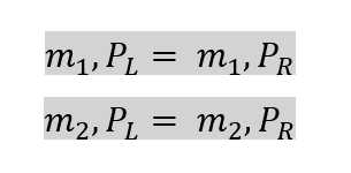
m1 is the mass of the larger body and m2 is the smaller mass. PL is the pressure on the left side, and PR is the pressure on the right side. Putting them together we get our mass/pressure relationship. By themselves both sides are equal.
Adding both separate formulas together we can calculate the new pressure experienced by their combined influence for either side (with the large mass being the point of reference).
Left side of Mass 1:

Right side of Mass 1:

This now shows the total gravitational pressure of the combined system upon the Main Mass. Can also do the same thing with the smaller mass as the point of reference.
We can also show the new total pressure experience by either body (the purple filled area in figures 2 and 3), Where Lr is the Lagrange point position:
Total Gp experienced by Mass 1:

Total Gp experienced by Mass 2:

Top: Here we have the expressions of both masses isolated, and the range of gravitational pressure they will experience in line of sight.
we can now apply the direction of pressure shown with the little arrows below.
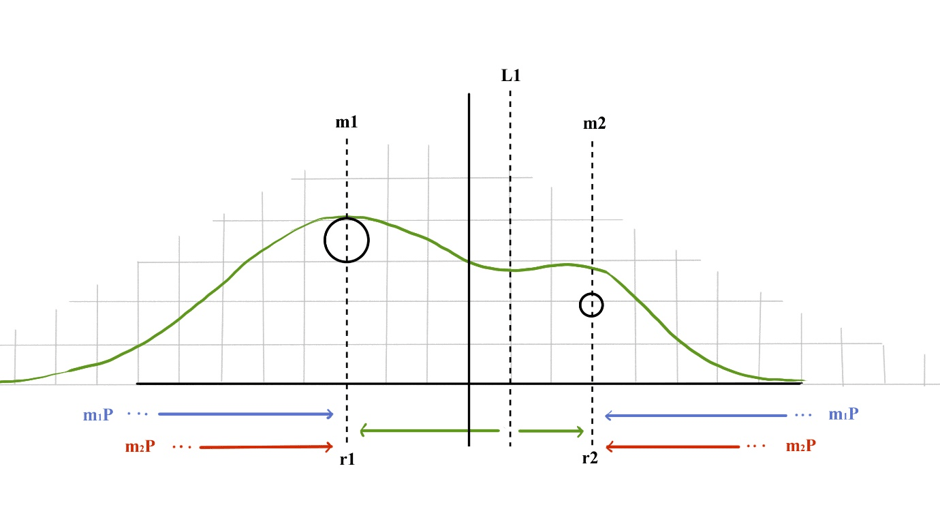
As you can see the combined pressure on the left side of M1 (the blue and red Pressure lines) are now much greater than the pressure it experiences on the right side (The green line – remember, we only count the pressure from the Lagrange point to the mass)
We can also see that Gravitational pressure on the inside (Green line) of the smaller mass is much smaller again, compared to the force pushing from the other side. So that would result in much more pressure on the outside, exerting a greater force against the smaller mass compared to the larger. The further away the masses are, the less pressure experienced by either of them from the outer side.
This affect only applies when the two bodies are directly in line. If we look from a different angle, the combined densities still apply, but there is no cancelling affect. Outside direct line-of-sight the density is a combined experience from both bodies and any object would feel gravitational forces drawing to both.
So, for example. We automatically assume these bodies are orbiting. Like two suns, or one sun and one planet. But If the bodies weren’t orbiting, just sitting it space, they would “fall” towards each other.
The smaller body would move at a greater rate as it has a much lower inner pressure to counter the combined outer pressure.
The larger mass is also, still unbalanced, with the inner pressure from the Lagrange point to the mass still being smaller than the combined outer pressure. It might have less of an imbalance than the smaller mass, but it’s still imbalanced. So the outer pressure wins as well, pushing it towards the smaller mass.
The difference in imbalance means that the smaller mass is being pushed inwards at a greater rate than the larger one.
Throwing a Ball
Okay, so we’ve seen how mass can work on a large, astronomical scale. But how does how does that look on Earth with smaller objects?
Just like in the planet-sun example, the Gravitational Density warps around all mass. Not just massive bodies like planets and stars. But all matter, from the largest Black Hole to the tiniest dust mote. Everything.
And, when you have two or more masses within reach than they will be drawn to each other. Just like our star-planet example, and this applies to everything. The only difference is that unlike what we explored earlier, the primary mass is so dominant that we can effectively ignore the contribution of the smaller mass altogether.
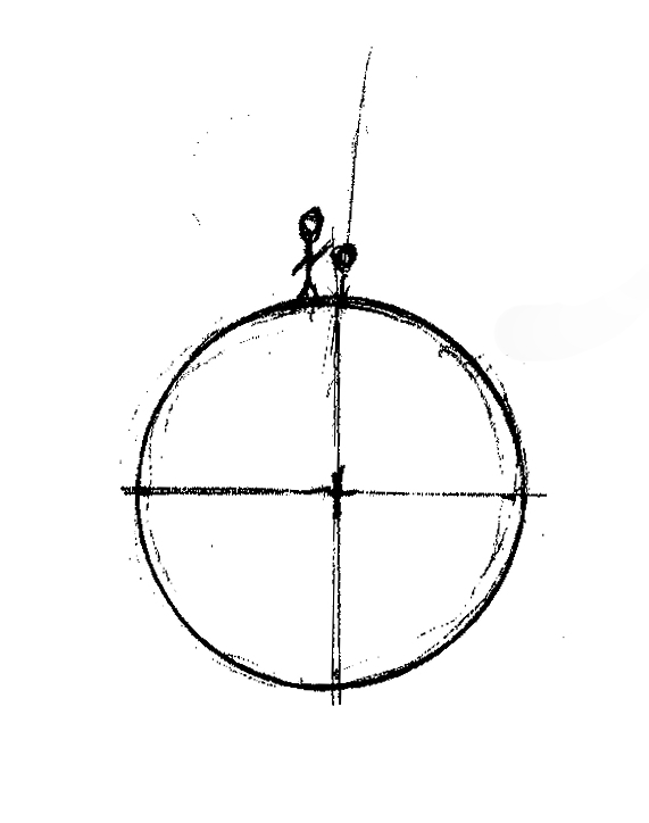
This ridiculous, overly exaggerated image shows a non-descript stick figure dropping a ball. Said ball falls to the Earth for the exact same reason why the two celestial bodies are drawn to each other. Because the line of sight between the two bodies cancels out the effect of gravitational pressure beyond the Lagrange/neutral point between the two masses.
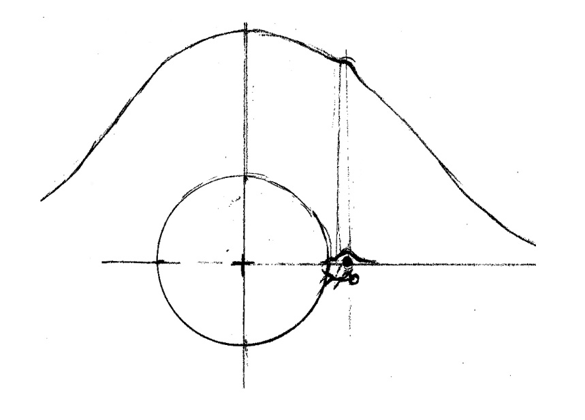
If we apply our gravitational field distortion to the ball and the planet — and rotate our cartoonishly-small world around — then we get our familiar picture (ignoring the skewered hand-drawn wonkiness) And just like before, their distortions are accumulative.
The difference is (when we picture this on proper scales), the ball is SO SMALL and the planet SO BIG, that the ball’s contribution to the Gravitational Field’s distortion barely makes a difference and the point where the two gravitational pressures are equal is so close to the centre of the ball that it my-as-well be the centre. So we can ignore the small body’s mass.
The most important information in this scenario is that the line of sight still exists. And as such we still have both bodies drawn to each other.
You might struggle to imagine this (as I did) — it seems that the cancelling out pressure between the two objects would cause the larger mass to hurtle towards the ball at a pace as dramatic as the ball falling to the planet. But there’s something else to account for.
The mass area of the Planet is so huge, that the gravitational pressure lines are almost parallel to the ball’s line of sight. That gravitational pressure outside the ball’s influence is still bearing down on the planet without interruption. The small, gravitational blip caused by such a tiny sphere of influence (from the ball) seems insignificant from the point of view of the planet. And that’s the important factor. The sphere of influence of the smaller mass.

Figure 7 Some weirdly drawn picture, poorly depicting the area outside where gravitational pressure isn’t affected by the smaller mass’s presence
This also applies to solar system bodies too, though the sphere of influence of the planet body is considerably large, it’s still dwarfed by the sun it orbits, and those parallel lines still exists around it. Drawing enough pressure outside the line of sight down on the sun.
Chapter Three: Orbiting Bodies
Welcome to Part 3 of my hypothesis of gravitation.
Previously we explored the two body system.
Here we will be looking into orbiting bodies, this should be a nice and quick chapter, so let’s get into it.
As I’ve shared, there’s a couple ways I picture things. So far I’ve been using this image as the main focus. Where the blue line represents the density of space, but they can also be expressed as gravitational field lines.
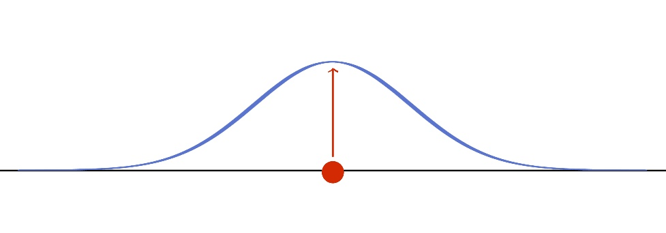
Figure 8 Gravitational Field Bell Curve line from a mass point
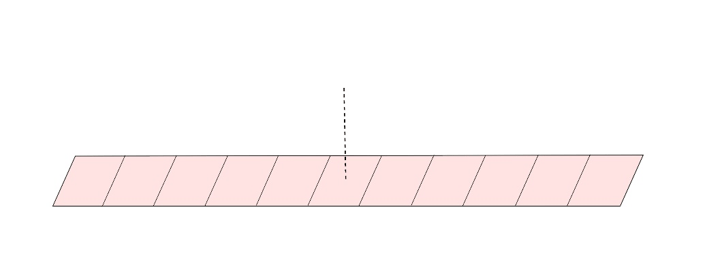
Figure 9 Gravitational Pressure without Mass
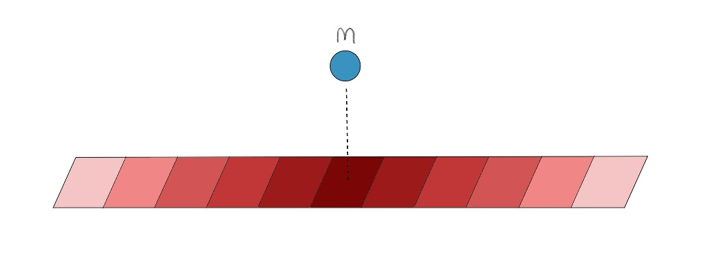
Figure 10 Gravitational Pressure With Mass
I also shared this picture briefly in a previous video. Demonstrating the density.
(use the one with the bell curve)
But here’s is another way I like to picture things – With a mass shown at the centre
And the gravitational density expressed outwards like so:
Figure 11 Gravitational Pressure density from a mass point
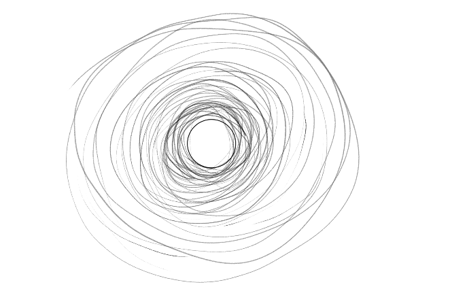
The circles/rings/spirals represent the strength of the pressure density. (with tighter rings the closer to the mass, and more spaced out rings the further out.)
Now we can go another step and show in terms of the spacetime field in what I call “Gravitational Field Lines” expressed in one direction, and might looking something like this:
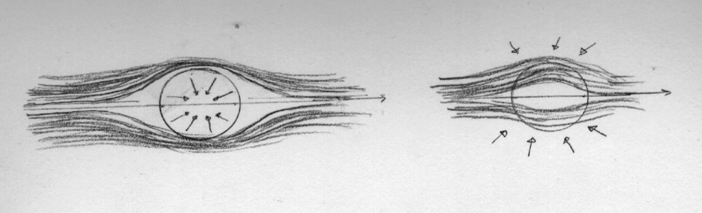
These lines represent the gravitational strength due to the spacetime density. The further away from a straight line they are, the stronger they are.
I still don’t know if this is a good way to picture it, but it helps show how this affects other aspects of the hypothesis. As long as you always keep in mind this is due to the density of space field itself, then it should help.
Sorry for this rambling, Personally it helps me picture things in different ways which can help solve or reveal problems.
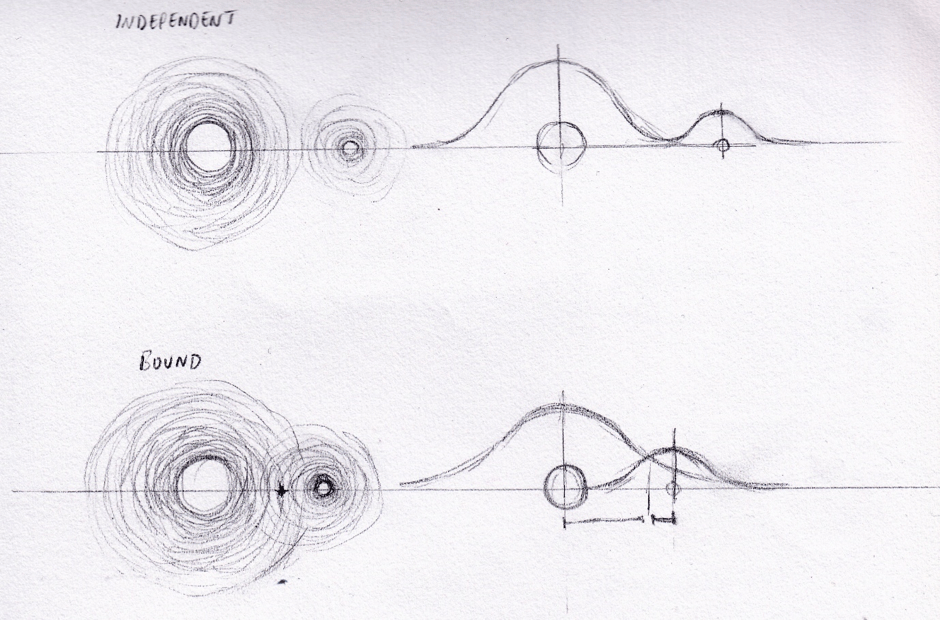
With the Two Bodies I can show how this would look for the different visuals cues I just suggested.
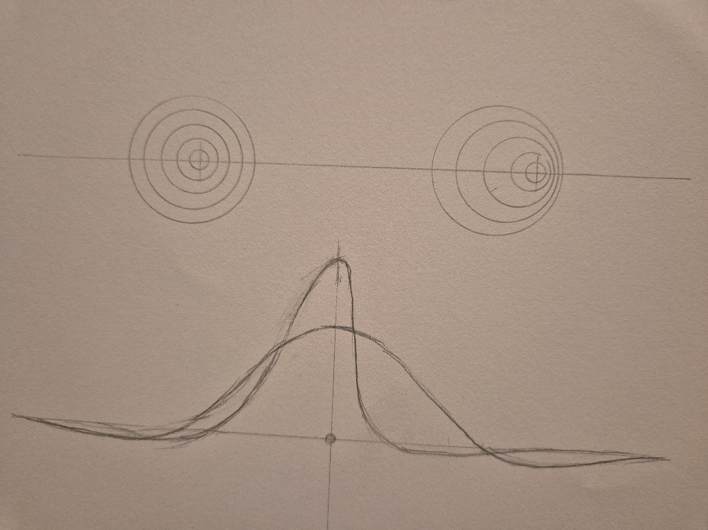
Figure 12 Top shows two unbound masses that do not interact. The Bottom shows the masses closer together. They are now bound and will be drawn together.
And Using the directional plane we can also express an orbiting frame like so:
Figure 13 The (exaggerated) orbit of a smaller mass.
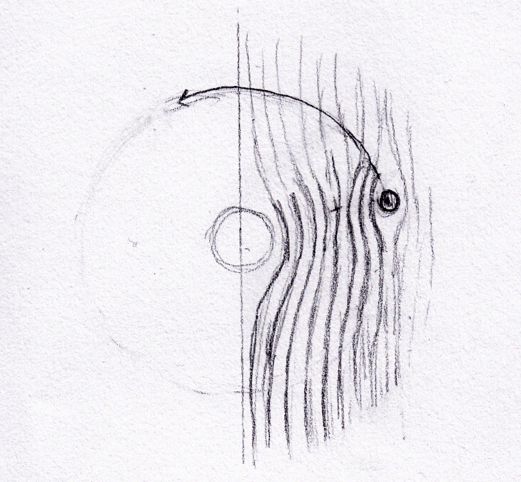
Really, this is very similar to Einstein’s curved space images we often see. But instead of dips where mass bends space, we have “intensity” I guess.
Without orbiting mechanics the masses would be drawn together in a straight line due to the line of sight cancelling of forces. But if we add motion to the smaller mass (and use the Gravitational Field Plane to see its effects) we get this image.
Figure 14 Direction Vectors on orbiting mass
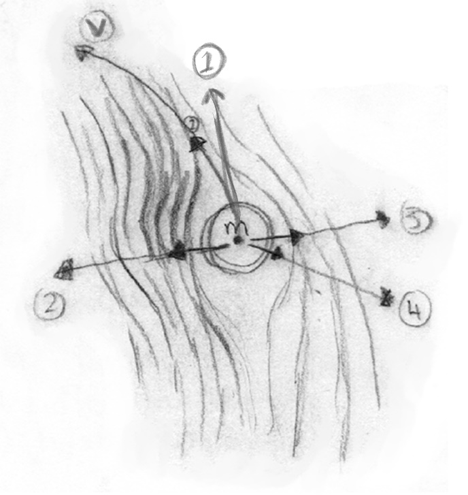
The gravitational field lines are curving around a central mass star out of frame on the left.
These lines are being “pushed” away from both present masses (the one shown in this drawing, and the dominate one out of frame). This results in gravitational pressure around the masses that decreases with distance. The secondary mass, kind of “catches” between the warped field lines caused by the main mass, further warping said field in that localised region. These altered field lines produce a strange pattern, no longer neatly stretched from a single body, but instead pushed and pulled between the two bodies.
Each vector is a “force” acting on the mass. V(1) is the direction of velocity. V(2) is the total pressure from outside the smaller mass, pushing the body towards the central mass (as we explored in the previous video). V(3) is the counter pressure, pushing outwards, from the balancing point at the Lagrange point. And, V(4) is the built-up gravitational pressure caused by the orbiting mass – I’m not sure if this V(4) option exists. In coming chapters we’ll explore possible variations in density that might result in this, so I’ve kept it in but it’s probably not be a thing.
Adding these all together we get the overall directional vector of the smaller mass. This results in the smaller mass orbiting the larger. The smaller mass needs to be travelling at a specific velocity at that specific distance to remain in orbit.
Nth Body Problems (A Quick Dive)
The orbiting behaviour plus our line of sight gravitational density behaviour would also explain orbiting resonances and unstable orbits. When an object falls within the line of site between, say the Sun and another planet, that suddenly alters the cancelling out effect it had with its line of site with the Sun. The picture is suddenly more complicated.
The line of sight density suddenly goes from two independent positions, to three.
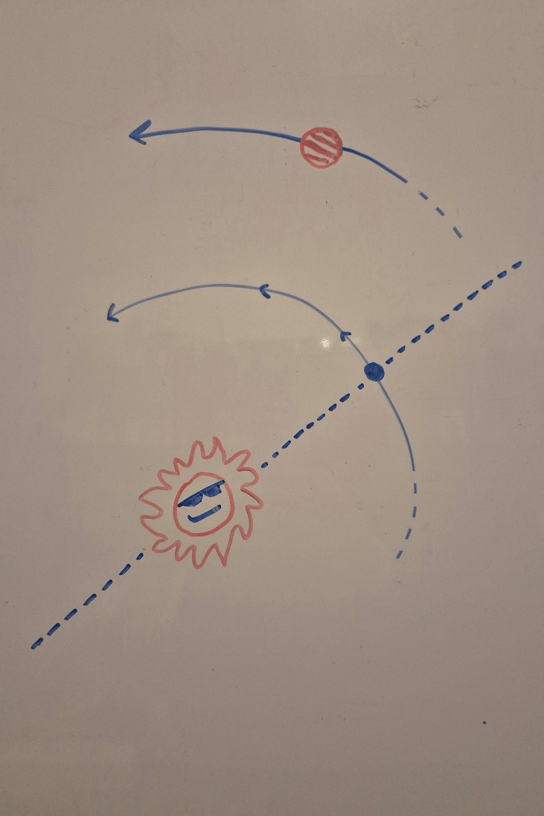
The two on the outermost side of the outer bodies. And the two between the inner body each outer body respectfully.
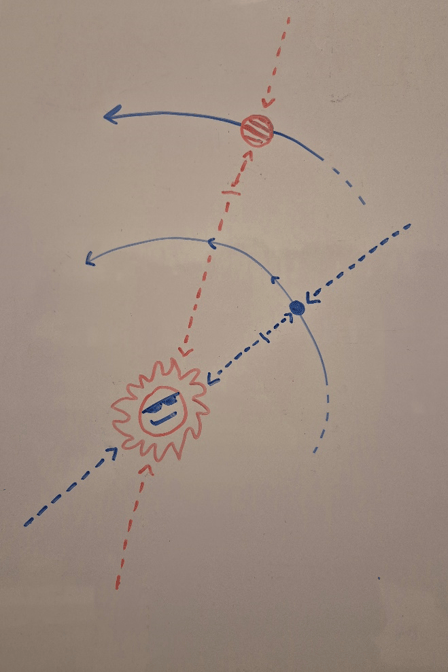
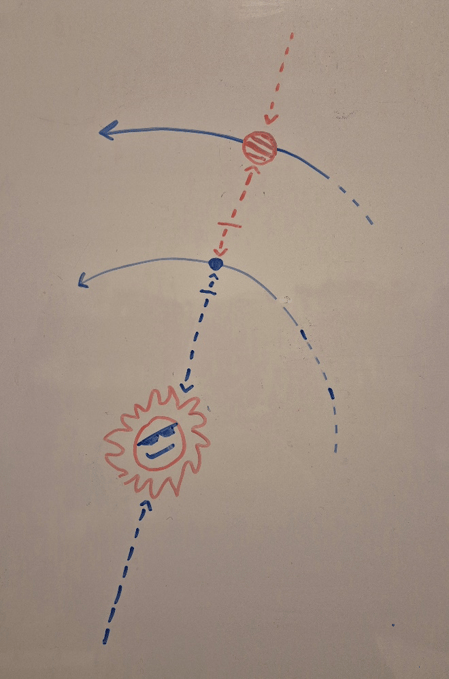
Suddenly, this middle body is no longer experiencing the higher gravitational pressure from the outer side it usually always experiences when dealing with the Two Body gravitational density. A large chunk of that outer pressure has been cut off. And for a brief point in time, while all the bodies are aligned, the middle body is experiencing different effects dependent on the mass and location of the 3rd outer body.
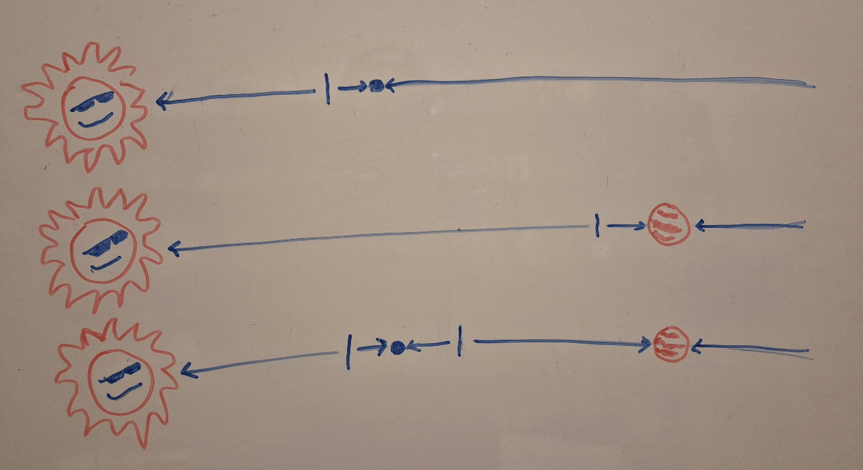
Regardless, the middle body will receive a “kick” of apparent energy. And depending on the strength and regularity of this 3 body alignment, that kick can completely change the orbit, or help stabilise the middle body.
***
Chapter 3.5: The Elasticity of Spacetime
A side quest between the real chapters. (there’s some irony in the fact this is much longer than the previous chapter.
In the first video I posted, I said that I’d changed how I see the density of spacetime, but as an introduction I would keep the old version, just to keep things simple, now it’s time to introduce the other.
Previously, I described mass as the knotting/vibrational/harmonic twists of spacetime. The very existence of matter is pulling the fabric of space in towards it. If you recall I used photographs of a string with knots to demonstrate this.
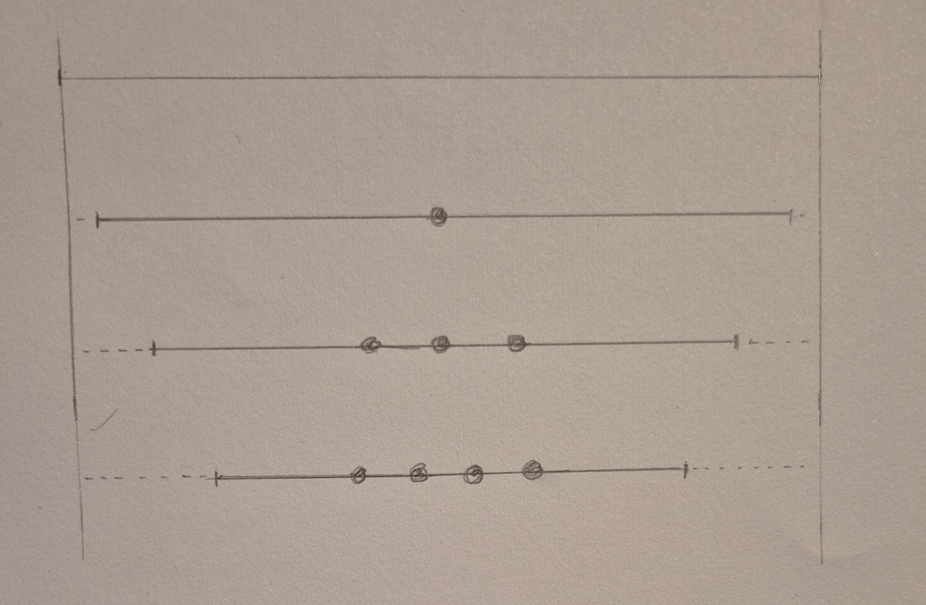
each knot within the string representing the shortening of space.
But I decided somewhere down the track that this wasn’t the correct way of visualising it.
Instead of physically having the ends coming closer together like I was assuming earlier, I instead decided that they are fixed in place, and space itself is stretching to make up for the knot created. It’s contracting at the point where the mass rests, and stretching outside that area, from the points on either side.
It’s here I need to also admit, that my limitations with maths means my ideas are starting to branch and I’m not sure which direction they take. From here on in, I will have one or two variations pop from time to time. They could all be wrong I’ve already admitted that. So I’ll just propose them as they pop up and if it gets too messy (and it probably will) I’ll choose the variation that fits best and then hope for the best.
So being lazy with word processor, we can visualise The new way I decided to look at behaviour of spacetime density.
| | | | | | | | | | | | | | | | | | | | | | | | | | | | | | |
||| | | | | | | | | | | | | | | | | | | | | | | | | | | | |
||| | | | | | | | | | | | | | | | | | | | | | | | | | | | |
||| | | | | | | | | | | | | | | | | | | | | | | | | | | | |
This is a crude representation of incremental space between two points.
The first line is space without any mass. Here gravitational denisty between increments is exactly the same.
The second is how I’ve been using it. Where the gravitational density (from a mass point on the left) has caused space to contract.
The third and Fourth are looking at it relatively.
Here the distances aren’t contracting, It’s the densities that are shifting.
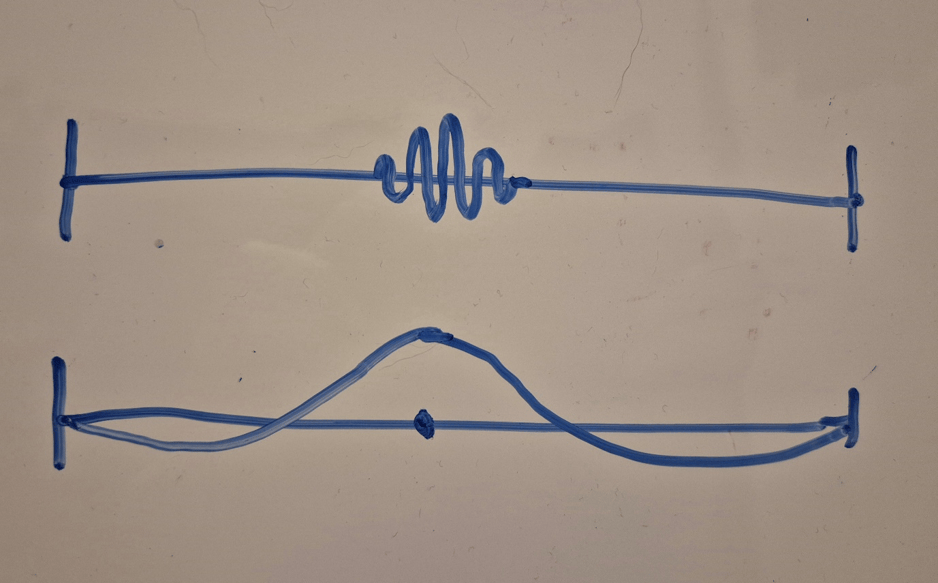
For the third option we have a stronger density on the left where the mass would be, we then move into the middle where the density of the oscillation is lower than the average regional density, before returning to the normal background density.
And the 4th and most likely option has all the space outside the masses sphere of influence adjust to the shift in density. Like the third option the overall density is maintained, but instead of a trough of lower density, it is evenly stretched. So the right most portion of space, would have a lower density then the first option, massless spacetime scenario
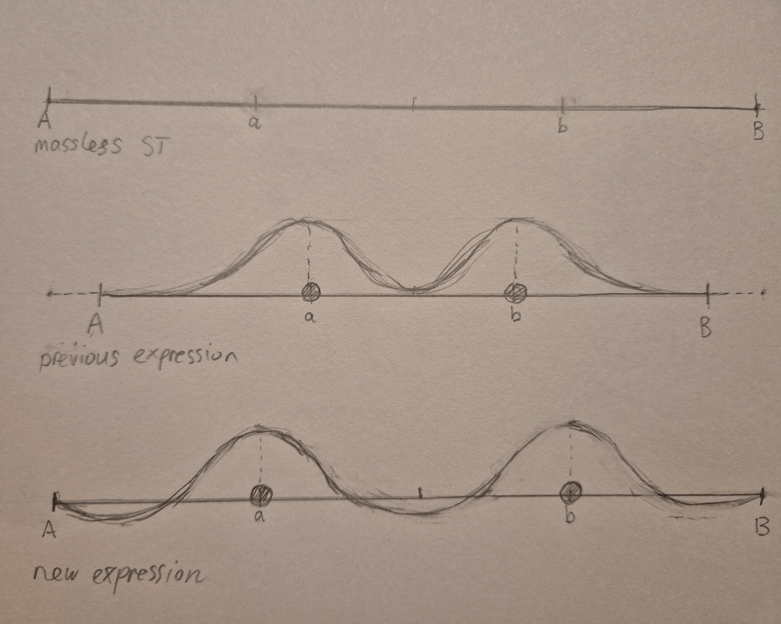
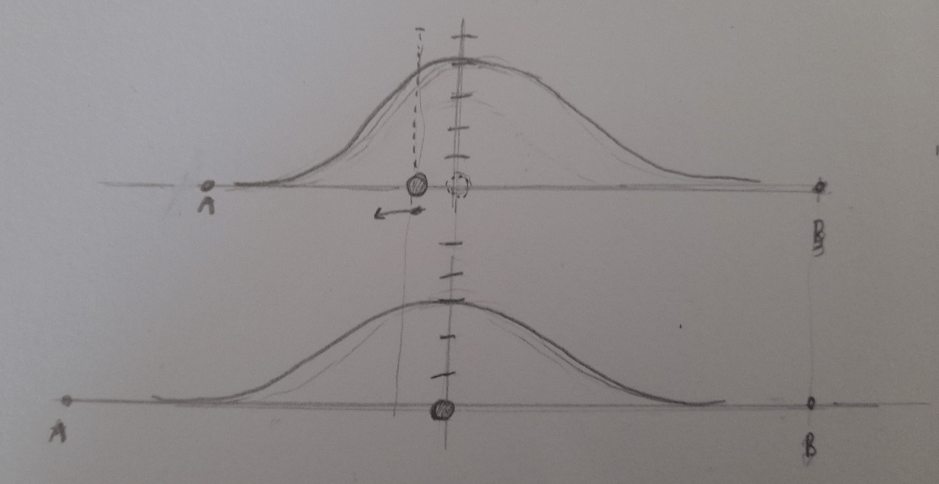
And here’s hand drawn bell curve picture demonstrating the same thing. Massless at the top where we have points in space A, a, B, b. And how I’ve been using it previously in the middle, with the physical movement of the points, and the new system below where the points in space remain where they are. (note: this is the third option, the fourth option would have the A B points at the lowest point.)
So what does all this mean?
If we have a standard gravitational density, a neutral state, so to speak. And it’s not the bottom most state that density can be, then under certain circumstances, that gravitational density will be lower than expected.
I imagine this variable density like trying to move through different substances. Like walking through air and then through water. Walking through air incurs next to no resistance. It is effortless. But walking through water you experience a noticeable resistance. It is harder to move, you have to put more effort into it.
And this also applies to Gravitational Density. But instead of a physical resistance, it’s more like energy resistance.
If you match up the incremental lines from a non-mass distance to increments caused by mass we get the following
| | | | | | | | | | | | | | | | | | | | | | | | | | | | | | |
||| | | | | | | | | | | | | | | | | | | | | | | | | | | | |
For the first notch of the top line, there are 4 notches if there is a mass present. So that would be something like 4 times the energy needed to travel the same distance. And when we look further out, closer to the centre, we have the lower density area, that means it takes less effort to travel that distance. Less energy. And if we use the fourth option, then there would be a consistent lower base denisty from the middle out to the right side compared to a massless system.
The important point here, is that the overall density of the system remains the same. So the sharp peak caused by a body of mass, causing that area to have a higher denisty, must be countered with a lower density outside that mass to makes sure the average is maintained.
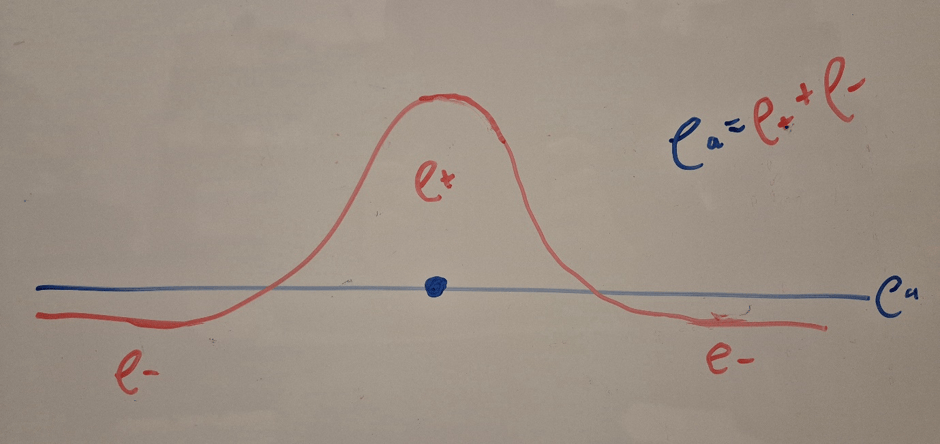
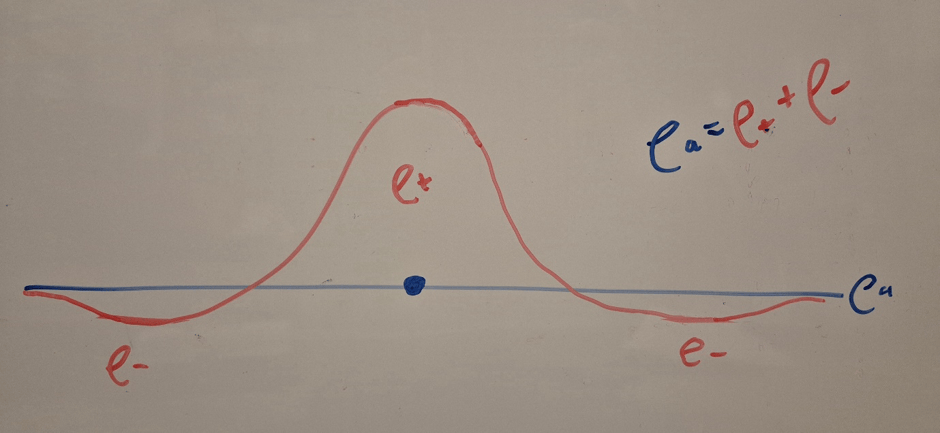
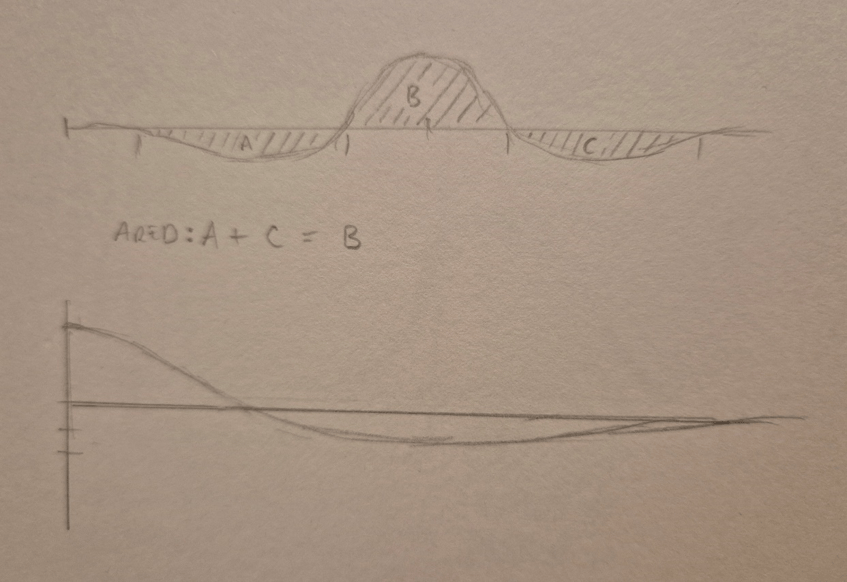
[Note: these drawings are simplified. The area of increase density and lower density should be equal. Which would mean the lower density parts (for a decaying density concept) would stretch way further out than what is shown here, how much that dampening effect would be, I do not know, but I suspect the trough would be much less than the central peak. If we go by the accepted theory that gravitation is infinite, then that lower trough would stretch through all of space.
The third option:
Looking a bit more deeply into the dampened gravitational density idea:
The dampened option is most like rubbish. So for future chapters I’ll stick with decaying density version but I’ll explore the possibilities of the dampened version here before moving on.
So instead of decaying smoothly to the background density like in the fourth option, we have a dampened oscillating effect. – PS, the oscillating density option could have multiple variations: anything from an infinite oscillating effect, or just the one dip that rises to the average background density.
But all have the same common factor: that this possibility means there are points along that space where the density is actually lower than the average background density. This implies that space density is already in an excited state. And that somewhere (or somewhen) there possibly exists a true ground state.
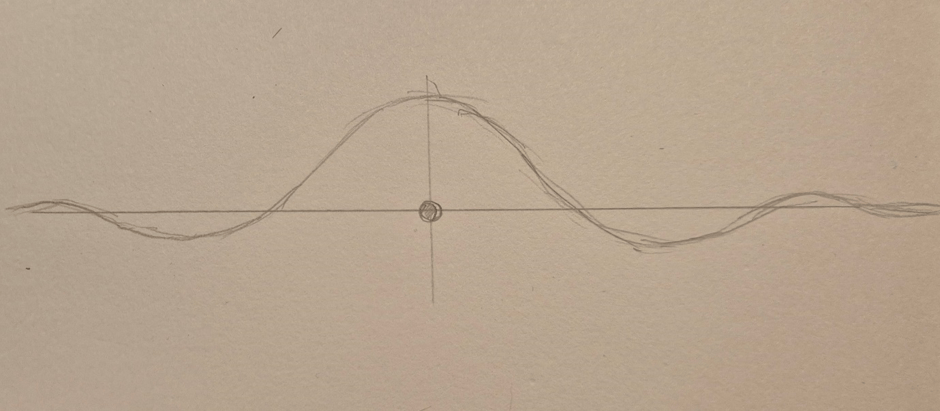
If there is a trough, the smaller the trough minimum density is, the further out that stretched density will be. This is a bit of a pain to draw, I keep defaulting to something less stretched, and even this example is probably way under stretched, so keep that in mind going forwards, and it should be stretched much further and be much shallower than what is shown.
Questions one might ask is that would this change the behaviour of objects in the lower density regions? Would that contradict observational evidence?
Just from a quick look one can summarise that anything on the right side of the trough would be pushed away from the mass, not drawn in. This would imply that gravity does not have infinite reach and that all objects aren’t drawn together. There is a point where they are pushed away. Does this contradict everything we know and break my idea? … well, we do have an expanding universe, and galaxies outside our local group are moving away from us. Could this be a consequence of that? That it might play apart in the forces expanding space, could this elascity of space be what we think of as Dark Energy? I don’t know. But I imagine that trough would be awfully far away from the mass point. On a local scale it probably is overridden by all the mass around us. But on a larger scale, where great spaces between clusters occur, perhaps its presence is felt.
Much like our thrown ball in the 2nd part of this theory, the ball’s mass is so small it can be ignored, so too can this dip be so far away we can ignore its effects in the local universe. And again this all hinges on the point that there is an average density that ST is trying to return too, and not a fixed lower density that has no trough.
What does this mean for matter in the universe as a whole?
In the end both of the corrected option imply the existence of an excited state of gravitational density
This makes sense when you think about it. Everything would be creating a gravitational density. The background density we experience on Earth is a combination of the Earth, the Sun; the Milky Way, the Local Cluster, and the Virgo Supercluster. Each layer of complexity adding to the local area background space density. So though the space between planets and stars and galaxies might be empty, they will have varying spacetime gravitational densities that can be higher or lower depending on the overall mass in that part of space.
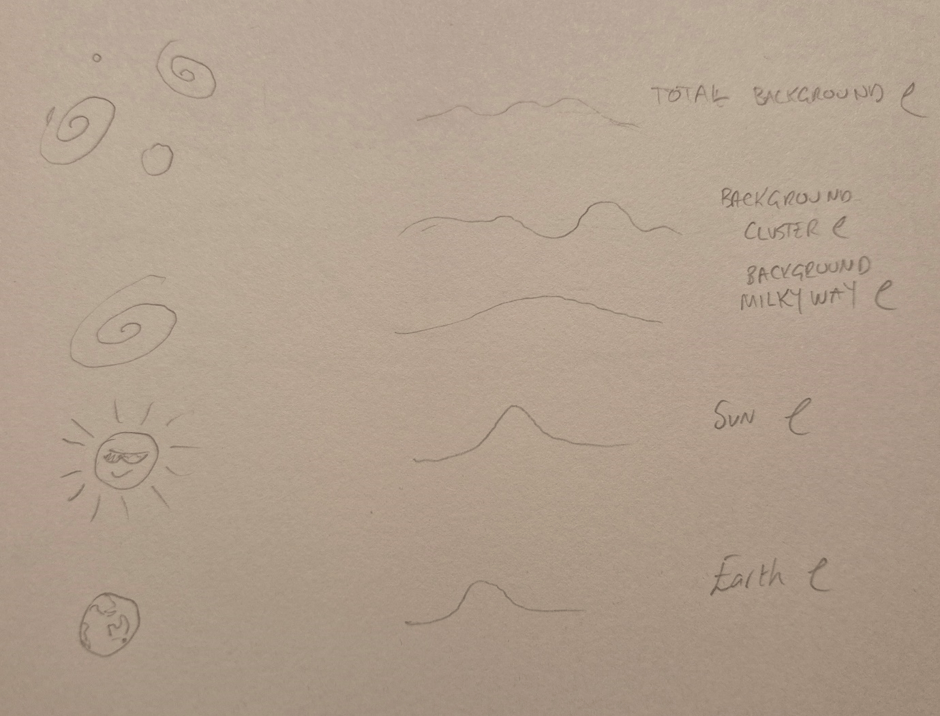
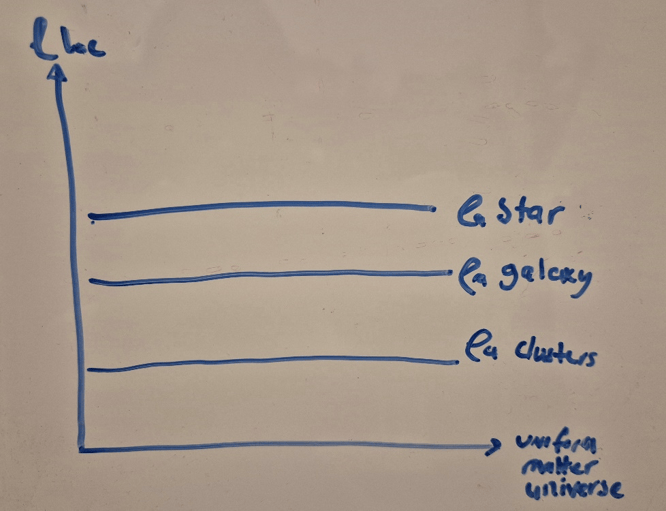
And if we go the other direction, and look at it from the, big bang/age of the universe type thing then we might see something like this:
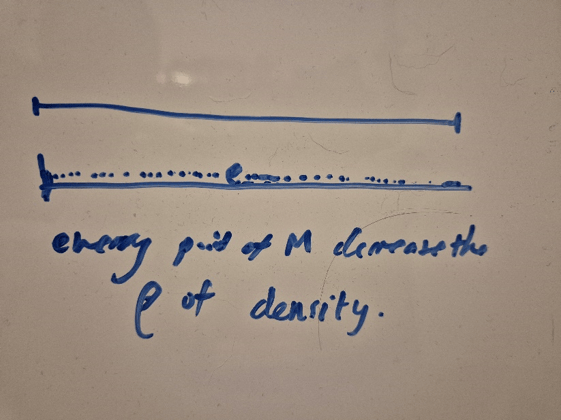
Before matter formed in the early universe, the gravitational density would’ve been higher and more uniform. But as the fundamental particles formed, they drew in a bit of the spacetime around it. At first this wouldn’t look different from the massless universe, as the particles are mostly uniform themselves. But then as they clump together the gravitational density between mass clumps drops. So overall the density is the same, but the uneven distribution as more of the particles come together means that the density of empty space is largely lower.
I don’t know if this effects things in other ways, but will try and explore the possibility down the track.
What about
Chapter Four: Special Relativity
So with that,
It is time. We have finally reached Special Relativity.
In the Part 3 video I briefly mentioned that an orbiting planet might experience a leading edge gravitational pressure, but because the orbit speed is so slow, that pressure can be ignored. – Well. What if it can’t be ignored?
The thing is. Gravity and Light have something in common. They both follow the same speed limit. Light takes about 8 minutes to travel from the Sun’s surface to Earth. But the interesting thing is, if by some mysterious event the Sun suddenly disappears we would still feel its gravitational effects for 8 minutes as well. For those 8 minutes, we would continue to receive sunlight and continue to orbit around where the sun was. Only after those 8 minutes would all hell break loose.
This fits the premise that light and mass are all vibrations within the ST field. Where one propagates unperturbed through the medium, while the other is caught in some kind of oscillation or knot type fixture that keeps it relatively stationary.
If the mass knot/vibration somehow unravelled, then this would cause space to return to its original shape.
But this also implies that the gravitational field wouldn’t instantly snap back to normal, it would “decay” so to say. That stretched Bell Curve:
Figure 21 Our Usual suspect
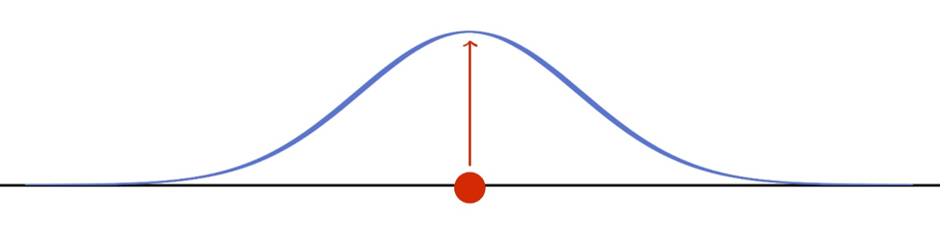
Yeah, that one. Would return to normal at a rate related to the speed of light.
(Side question: if this is so, then could this mean the sudden absence of the Sun would be felt via a decay in gravitational influence, rather than a sudden absence?)
So, this means the Gravitational Field isn’t instantaneous. It needs time to react, it needs time for that space density to flatten to its background state.
But if we look back at a moving object, that gravitational field would be stretching ahead of it as it moves, and dropping back to normal after it passes.
Normally the rate of rising and falling is so fast it has no effect on the moving object. Just like how a tennis ball is so tiny compared to the earth that its mass can be ignored. An object moving around spacetime is moving so slow that the rise and fall of density from its sphere of influence is basically instantaneous – you can say that the density is moving with spacetime.
But if the objects starts to reach relativistic speeds, then the density of space wrapped around it will start behaving differently.
How this behaviour would look, I’m not certain. It’s something you’d need to explore with mathematics to determine the how. But I can picture 3 possibilities.
The first way, is that the relativistic speed of the object is dragging spacetime with it. The natural properties of the decay of ST mean it can’t react quick enough. So this results in an increase of density in the direction of velocity, and the slower decay of that excess density leading away.
The benefit of this idea is that it can also be used to easily describe the Lorentz contraction. But I do struggle with the idea, whether that’s plausible in the ST medium. The possible con is that this would mean the mass sphere of influence would increase. That could be used to explain relativistic mass, but this behaviour would likely affect things outside a reference frame, which means it’s probably wrong. This option would also create a drag-force. The closer to c the mass approachs, the greater the drag-force pushing back. This implies that large enough masses would slow down under their own momentum if they were travelling at relativistic speeds.
Gravitational density decaying implies that space can exert a drag force. But that force would be linked to velocity and mass. Because if we look at this image, that same phantom force being created will shift the centre of mass, The real mass would be ahead of that CoM, and as a consequence the real mass would feel a pressure trying to pull it back in. Any particle travelling at these speeds could not do so without acceleration. They would need energy input to keep them at that speed.
This also might imply that there is a maximum cruising speed particles can travel without needing to add energy, where their velocity is just slow enough that the drag force would be negligible. If so, then smaller masses would be able to travel closer to the speed of light then larger particles. It might (and this is a massive might) also explain with neutrinos seem to not slow down. Their tiny masses allow for them not to just travel through matter with little chance of collision, but also their cruising speed is so close to light they don’t experience drag.
The other two ideas we keep the ST density firmly tied to the mass. The total density of the system doesn’t change.
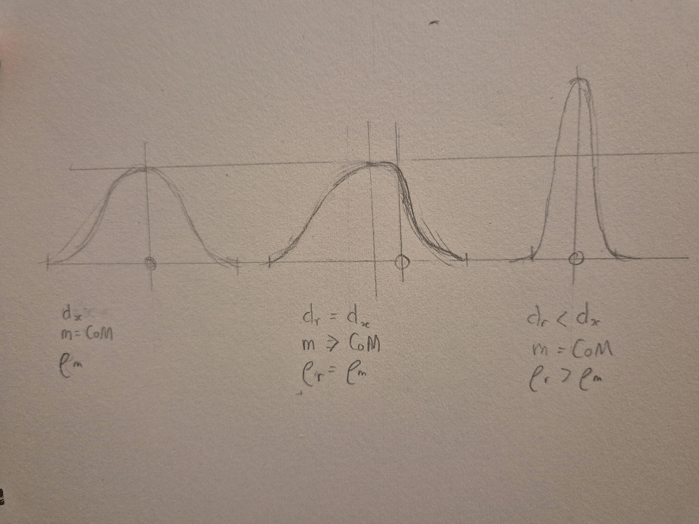
From this drawing, the picture on the left is the non-relativistic velocity.
The second possibility is the middle picture. In this the peak density remains the same, instead the mass is moving so fast that space density itself can’t form quick enough, shifting the CoM of the single mass system. In this scenario the distance of the sphere of influence remains the same, and there would be a “drag force” acting on the mass. An acceleration is required to maintain this speed. The closer to c the mass gets, the closer to the edge of the sphere of influence it reaches, and the more energy needed.
The third possibility is the image on the right side. We again maintain the total density of the system, but shift the peak density. In this scenario the mass remains with the COM no matter what. The distance of the sphere of influences becomes smaller and the peak density increases as it approaches c. There would be no drag force from space itself. As it always keeps up. But the nature of the inverse square rule would change. The closer to c the object gets, the more it would behave like a black hole. This would also explain the Lorenz contraction. Though contrary to how we talk about the consequences of Special Relativity, any person who travelled in such a way would be crushed from the increasing density. This would appear as increased, relavisitc mass, but unlike relavistic mass, it’s sphere of influence would also contract.
From that deduction this would imply the gravitational inverse square law relationship has a relativistic component. That perhaps the Lorentz factor (gamma) is a functional part of spacetime itself.
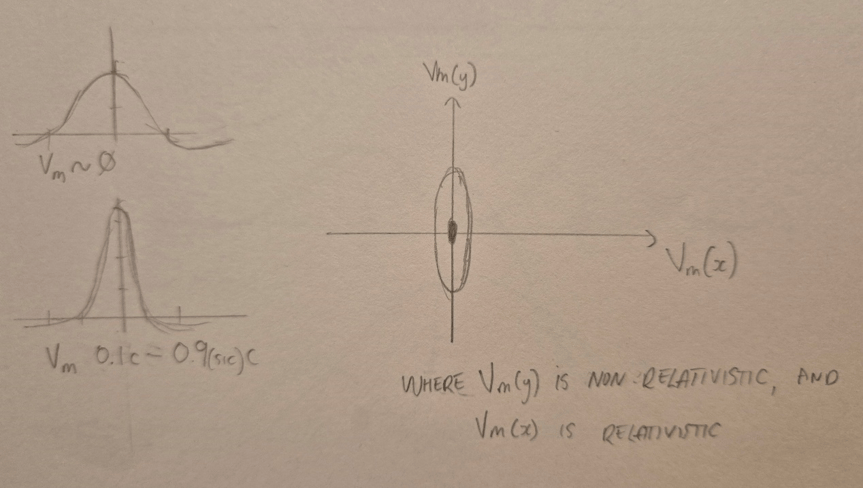
And this shift in density/distance would only apply in the direction of movement. The space perpendicular to the object will maintain it’s non-relativistic shape.
And of these 3 options, I honestly don’t know which it could be. It would depend on the behaviour of space density and how quickly it reacts and decays. But of the 3, I think the third option is the most elegant and fitting.
It requires increasing energy to approach c. Energy would need to be infinite to reach c. The decreasing sphere of influence would satisfy the Lorentz Contraction. And an Increase in density would explain time dilation.
holes, stars, and even planets will distort light from behind; just a tiny bit.
Concerning Time:
Like so many concepts I’ve shared, I don’t have a clear idea concerning time. It’s really just me trying to shoe horn in something and hoping it fits.
But basically if I see the density of spacetime as a gravitational energy, that impacts on space, then perhaps there is also a “time density” where the flow of objects through space also changes, a viscosity of the field. Where instead of density of objects being the product of mass and distance, the spacetime field density is time and distance.
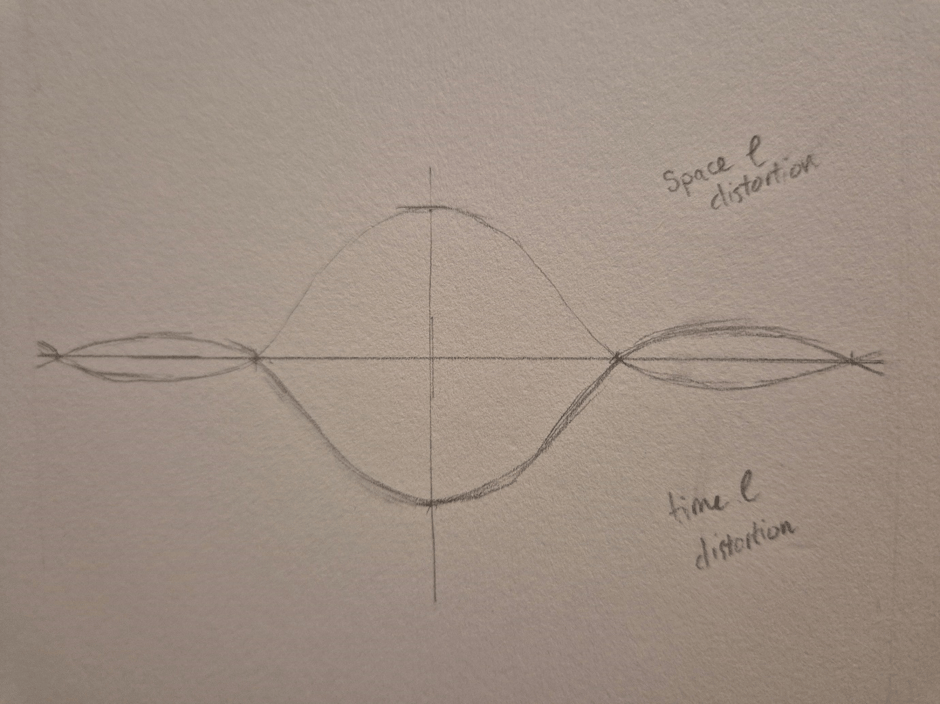
If we return to our incremental space analogy we said that increments of distance in spacetime without mass are all the same, and therefore the flow of time is the same.
But when we add a mass, then those increments shift. They come closer together near the mass, and stretch outside that to maintain the distance of the system. If we assume the flow of time is bound to space as well, then time will compress and lengthen just like space does.
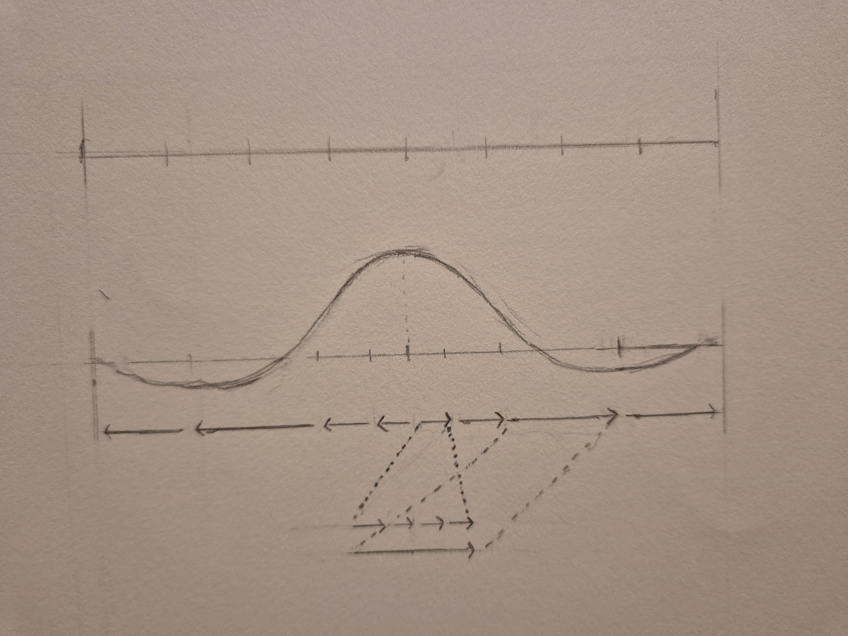
My thinking is that the flow of time represents that distance. So for each moment of time passes for a smaller arrow, the larger arrow will take longer. If you put them side by side (from my picture that is), then the larger arrow will equal the length of 4 of the smallest time arrows. So the longer arrow will experience 4 times the length of time as the smaller one. <<< this is how I’m imagining it, anyway
Just a note. Though I say distance is compressed or stretched, it’s not actually the distance that changes. What is changing are the properties of spacetime. The amount of energy one of these massless increments of space holds will shift, now taking up an area/distance that is either shorter or longer. Those increments for physical distance remain the same. It’s the energy of the system (The density of space, and the flow of time.) that is shifting around. In a way, you can picture spacetime in the same way as the conversation of momentum. Over all the density and time remain the same, they just shift around.
I was wondering what this would look like from a graph point of view. And I come up with this:
Figure 19 Distortion caused by mass. Gravitational Density (top bell curve) and Time Density (bottom bell curve)
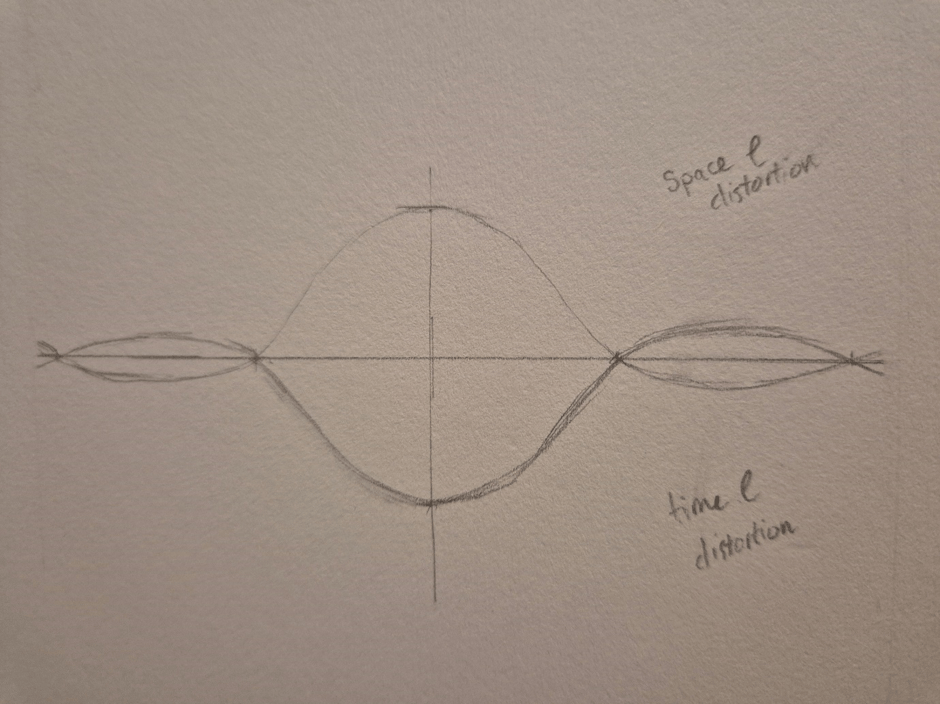
The wonderful thing about this picture is that if you combine these two curves they will cancel out. Returning the spacetime to it’s flat, even-density self.
So in the same way that mass will shift the Gravitational density from its neutral ground state, so does it create an equal time variable. With each density curve we create, there would be a corresponding “time curve”.
This is a pretty primitive and probably straw clutching approach., I know, but it’s the only way my old mushy brain can think of it. And I’ve tried thinking of solutions. So it’s a bit crude, and requires a bit of mental gymnastics (at least it does for me). But it’s the best possibility I can come up with.
And that’s my reasoning behind time and density, and how is flows slower around more massive bodies.
Side Note: Looking like photons
~ This whole imagining gravitational and time fields makes me think of them in the same way as the Electromagnetic Field of a photon, with the Electronic and Magnetic fields represented 90 degrees from each other. It’s possible that the Gravitational and Time Fields could follow the same logic (it kinda works as a visual picture, one can’t say it works mathematically though) ~
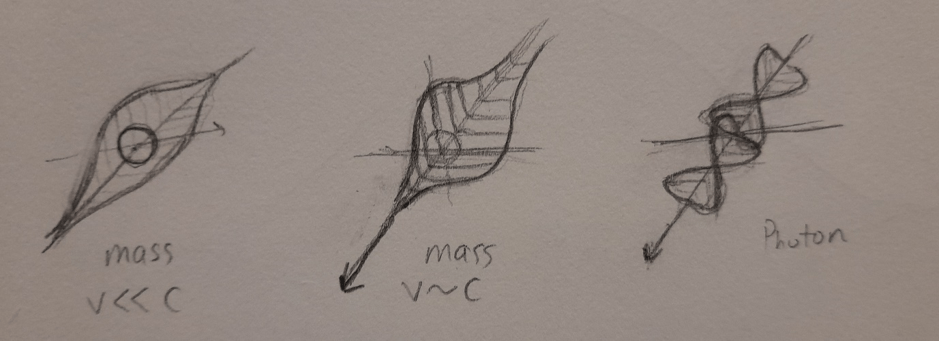
Figure 20: Left and Centre: Mass with Gravitational and Time Fields. – Right: Photon with Electric and Magnetic Fields
This function f(x) (where x would be mass) would produce something in relation to [Gρ] is gravitational Density, [Tρ] is Time Density and [S] is Space.
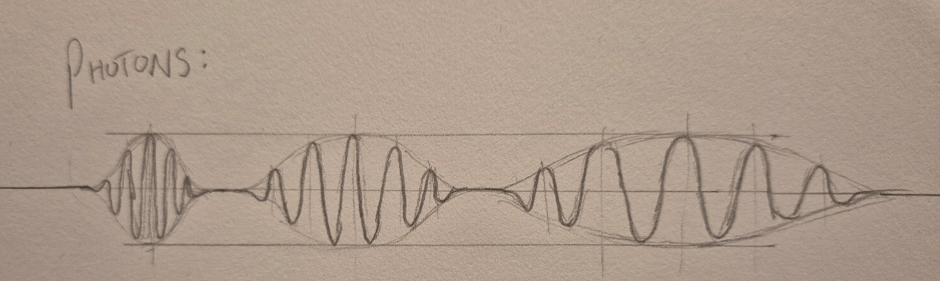
The propersition that photons could be affected by spacetime density does bring up a question. Could this only happen if a photo has mass?
But lets look back at a photon. What is it? It is the propagation of energy through space. But if we look at the shape then we see something that is now very familiar with us. We see the dampened ossilator.
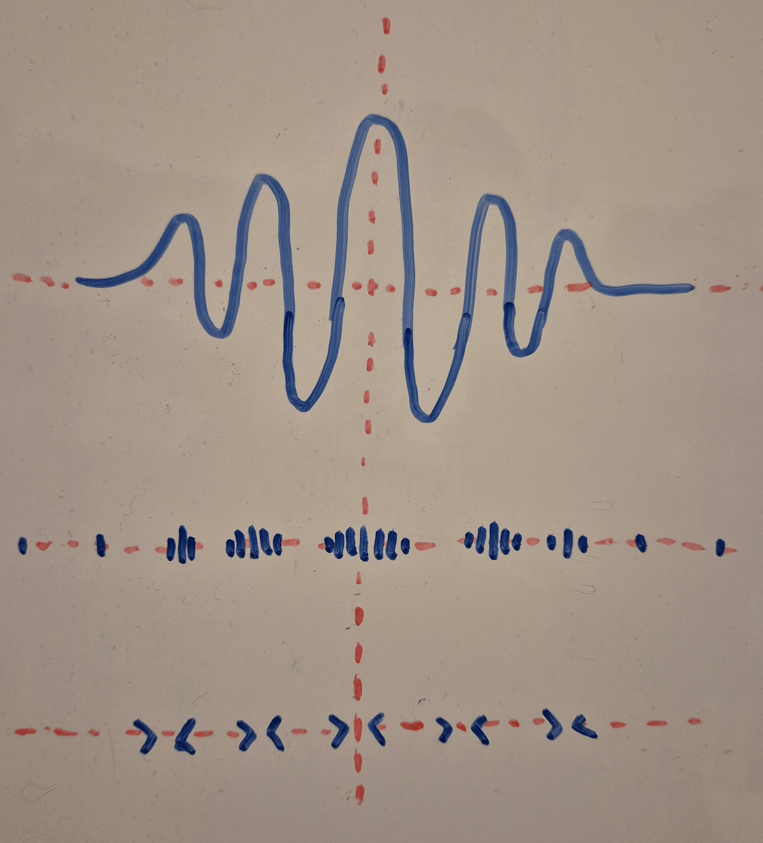
And on top of that. When we look back at our mass points. If we balanced out the stretching of space with the mass in question, then the area above the average and below would cancel out. Looking above, a photon would do the exact same thing. Those same peaks and troughs are shifts in denisty, but on the tinest of scales. And when you add the area up, they also cancel out. The precences of mass changes the flow of density for all of space. Massless particles change it for local space.
It is possible, that these little pockets could singally be affected by gravitation? If so, would they take the same path, as excepted in General Relativity?
Seeing them like this also helps explain how we see gravitational waves and can pick them up with detectors such as LIGO. For just like the density of time shifts with mass, so too would that shift within a photon. If a detector is sensative and far enough apart it could pick up a shift in increasing/decreasing density, that would shift the distance of space.
Chapter Five: General Relativity: Does it stand up?
We now hit the problem area.
Remember me mentioning my theory might not be that new after all? And that I learnt that others have come well before me. Turns out Several variants have come and gone, at least one of which looks very similar to mine. The one common uniter of all these theories is that they call collapse under the enormous weight that is General Relativity. ST just doesn’t want to play ball.
I’ve shared with you my hypothesis. And it seems to explain Newtonian Gravitation quite well. And there are a couple of possibilities to choose from that fit nicely with Special Relativity.
But at the end of the day, that means nothing if it can’t actually … well, work with General Relativity. So let’ have a look and see if we can get any answers.
Ultimately, I see my hypothesis as the same thing as General Relativity. Or very close too. General Relativity’s foundation is cemented in the idea that spacetime is curved, and that the presence of matter curves spacetime around it.
Whereas my idea as that spacetime can be pulled in and stretched, creating a density of space. When you put these two pictures together you basically get the same thing. The main difference (visually) being that General Relativity views this as a dip in space, where I view it more as a hill. It seems so trivial. Almost silly. Why am I even bothering? I feel like I might have just wasted everyone’s time. But I think the value comes from how naturally, and easily this is to picture. And how easy it is to see from the POV of both Newton’s and Einstein’s theories of gravity. Also the benefit of a simple explanation of what gravity is: a twisted knot of mass drawing spacetime towards it.
So, let’s explore some gravitational effects that failed under Newton’s law and see if my gravitational density can fit:
First on the list
Mercury’s Orbit:
Newton’s Laws failed to predict Mercury’s orbit precisely … Basically, Mercury’s orbit shifts ever so slightly with each approach, the shift is so tiny that it doesn’t actually cause a noticeable difference. It takes roughly 100 years for the error to be noticeable on any measured scale. That’s how small it is. Einstein was able to account for this small shift. And bam! Our first confirmation of General Relativity.
Can my idea do that same? … well, if I’m being honest with you. I’m not sure. I can’t say yes or no. Because, well, I’m not smart enough to tackle that weird and subtle shift (Again, it’s all in the maths).
I do have possible ideas though: I have that spacetime can cause drag due to the relativistic nature. But the precession moves ahead of the orbit, not behind. So I’m inclined to say no to that concept. It also leads to a strick against the 2nd Special Relativity model I proposed.
The other possibility is due to the changes of the spacetime density closer to the Sun. I postulate that mercury approaches close enough that there is a noticeable difference in gravitational density from the side facing the Sun and the side furthest away. Normally, for planets further out, the average density is close enough to be the same (Again, we come back to that tennis ball analogy, that it’s so small compared to Earth’s, that you can ignore it’s mass if you drop it). But Mercury experiences just enough of a difference that it affects it.
So, if the planet has a slightly shifted gravitational density, favouring one side. Then it might (and this is a big might) experience a slightly stronger pressure towards the Sun (or something like that) which would give it the slightest increase in orbital speed, pushing it along. This is all a big might. Again, I wish I had the mathematics knowledge and intelligence to work it out. This is also, something along the lines of the Roach Limit, so I guess the implication is that there is an area before the Roche Limit and where differences between smaller mass densities where this could affect a normal orbit.
Okay, that was a big “if” that has us on shaky ground from the start. So what about
Gravitational Redshift:
Redshift occurs from more than just objects moving away from each other. There is also a redshift that occurs from moving away from a mass. The more massive an object, the greater the redshift until we reach Black Holes, where photons fail completely.
Gravitational Density pairs perfectly with this. As light moves from a higher Gravitational Density to a lower Gravitational Density, so does its wavelength shift.
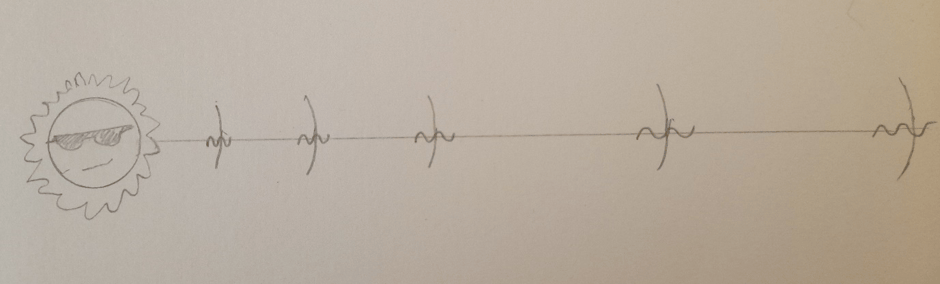
Figure 15: As Gravitational Density decreases from a Mass, so too does the Wavelength increase
This returns to the whole connected density, space, time concept. With Space being compressed closer to the star before returning to normal as it moves away, the photon shifts with it, from having a compressed wavelength to a less compressed one. This wavelength should compress again as it approaches another body of mass. In an ideal vacuum, if a wavelength travels from one mass and reaches an equal mass, then that wavelength should once again shorten to its original emission.
Redshift from movement. Do we have an explination as to why the frequency of a photon changes from physical movement? Like a star/galaxy moving towards/away from us will have a shift? What is actually changing? The photon produced should be at a specific energy? So why does it gain/loose some of that energy?
Doppler effect due to movement?
Photons move at the speed of light, they are a fixed entity. So what does that mean if an object is moving? Well, for movement it means that the photon has to accommodate the movement, so the wavelength will decrease (blue shift) if it is moving towards from an object. And for an emission moving away, that would mean the wavelength would have to increase (red shift)
What about Cosmological expansion?
Again, a couple of ideas outside expansion (not commiting to no expansion, just exploring the possibility)
One idea revolved around photon decay. If photons are osscilations within ST, then its reasonable to assume that it can lose energy to the medium around it over time. But that would be an extremely slow process due to the nature of time (explore a little later)
Another idea is to do with the funidental difference between the spacetime density early in the uniberse, than that of it now. Early on, Mass was more evenly distributed. But gravitation clumped matter into clusters, creating a higher gravitational density in this clusters, and a lower gravitational density outside them. This could affect how a photon would move through space over time. A photon emitted from an early galaxy would experience the background ensity between galaxies become lower and lower as those local galaxies clumped closer and closer together. So this could possibly cause a photon of λ to have varying steching of wavelength associated with time.
If this proves right, than the expansion of the universe could be an illusion, not an actual expansion. As matter settles into their clusters, the expansion should slow down and possibly stop/attract.
(image increase density, therefore should be blueshifted)
And this leads to
Gravitational Lensing:
What is Gravitational Lensing? It is the bending of light around a mass. When a large enough mass passes between a light source and us, it will literally bend the light around its body and the resulting new path will make the resulting light source appear from a different location in space.
Here’s a couple of images stolen from the interwebs
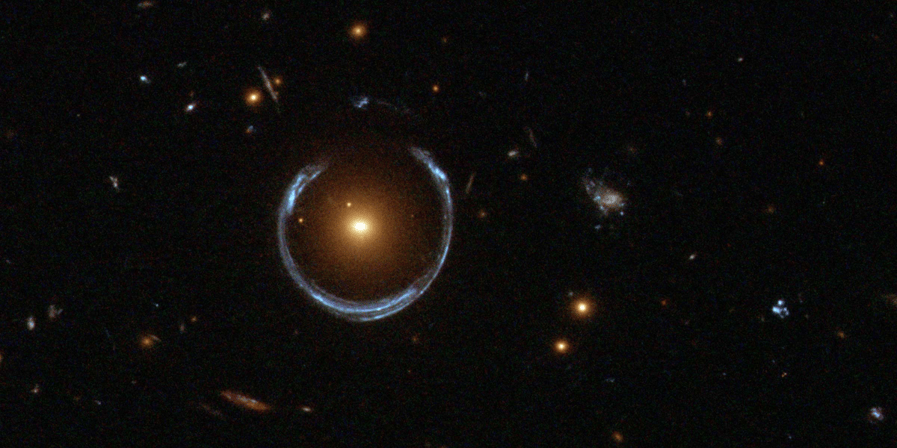
Figure 16: A large elliptical galaxy bending light from a small, blue galaxy behind it, forming this ring (Photo ESA/Hubble/NASA)
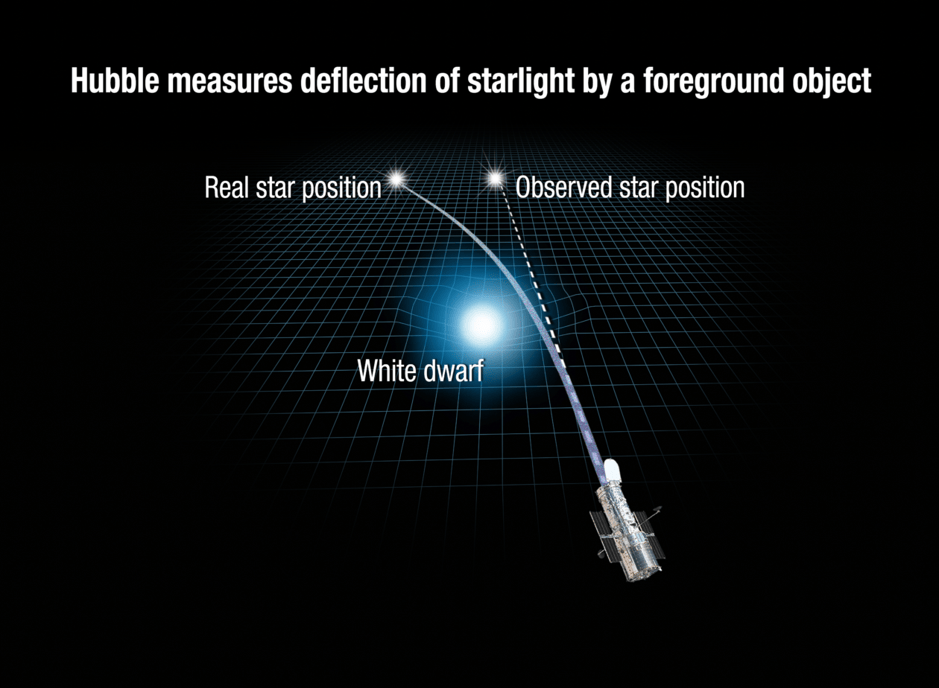
Figure 17: Anything large enough to bend light can be used, from galaxies to stars. Even smaller masses like planets bend light, though the deflection would be very minute
The question is: Does our idea work from G. lensing? Also, an unknown.
Originally I explored good old Snell’s Law, ie, refraction.
What is Refraction?
It’s pretty simple. It’s the movement of light from one medium to another. When the light beam approaches at an angle, and the density between mediums differs, the light beam will bend.
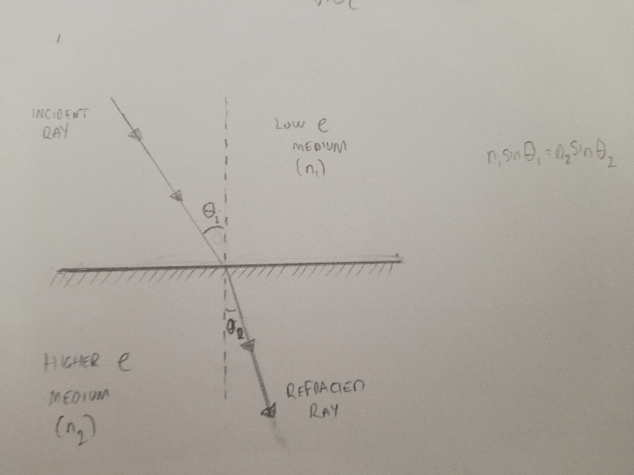
The reason the beam bends has to do with the shift in wavelength as it hits the new medium at an angle.
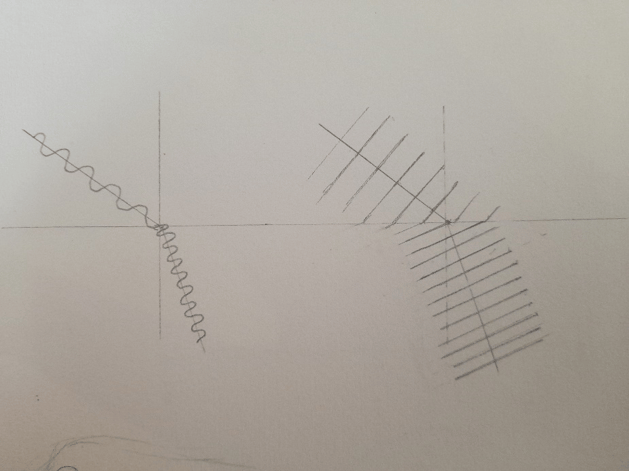
When light passes from a lower-density medium into a higher-density one, its wavelength shortens and this results in the beam “bending” towards the normal. Similarly, light passing from a denser medium to a lighter one will bend away.
How Would Refraction work in a vacuum?
Under normal rules we follow light wouldn’t bend using this method, as there is no shift in medium. The Vacuum of space is just that. But from previous chapters we’ve established there is a density, a density of spacetime itself. Photons approaching a mass will experience its wavelength becoming more compressed (more blue), and the wavelength of photons leaving a mass will stretch (become more red).
So it stands to reason, light approaching (off-centre) from a source will bend towards the mass on approach and bend away as it exits. The greater the mass the more this bending will occur. So what would be a straight line without any obstructing mass will now take a new path.
So would this be just like G lensing?
This isn’t straight forward though. Any light passing into a greater spacetime density would shift back to its original direction again, there would be a lensing affect, but the direction the photon takes on exiting the mass will be the same as it’s entry, the only difference is it would be shifted in distance. <<< Is it possible for this to be the factor for the shift we see. I don’t think so. And any shift would be highly dependent on position of the furthest mass and distance and it would probably require a stronger shift than seen. It would also not work at all with object an directly behind the lensing mass. This is probably the biggest failure of my concept. Perhaps the flow of time can also play a role, but again, that seems small.
Interestingly, researching this possibility is where I discovered my hypothesis isn’t new. It’s been proposed long before I was even born. I’m not sure if this is exhilarating or depressing. A bit of both I supposes. But inquires into it revealed that the main reason for this theory to be highly unlikely to be valid is this very issue. I don’t mean to brag, but I’m stoked that I managed to come up with a alternative theory and thought expeirenement in my mind the exact same issue. That’s impressive. But again, a little sad this has already been done. And that probably means a dead end.
So, what other alternatives can I explore?
perhaps, we can apply the two body system to light itself. Where the denisty difference between line of sight somehow manages to bend the light. But this affect can only be seen on enormous scales and with great masses involved.
This could describe the correct bending towards and away that would look the same as Einstein’s curvature.
But that raises the question: could a massless particle bend like that?
After days of pondering this problem (months if you ignore the breaks I have between working on this)I think I might have stumbled upon an idea.
I call this idea “density pinching”. Basically though light has no mass, it is still subject to the variations in space time density. When a photon moves from a gravitational density low regions to Gd high one, its wavelength shortens. And when it moves away from the denser region its wavelength stretches again.
But if the photon is passing through a section of the sphere of influence rather than moving directly toward the centre of it, then that photon would be experiencing a stronger density on one side then it would on the other. This would cause one side to contract slightly more than the other side.
Normally, the gravitational density difference is so minor it would have no effect. But the two scenarios where lensing occurs: ie close to a massive object like a black hole, and galaxies and galaxy clusters.
For small massive objects like black hoels and close to the sun, we can say that the gravitational density difference is large enough to affect something as tiny as a photon. So that’s simple.
Galaxies on the other hand, no so much. But I’m proposing it could be possible simply because of the sheer scale. So though the gravitational density is low overall. It takes a photon at the very minimum, 100s of thousnads of years to transverse through the galaxy/cluster sphere of influence. That sheer amount of time could accumalte even with the tinest of differences.
The one thing that could derail this idea is that photons are directional in their proergration. Polirsation of light shows this clearly, where light passing through, or reflecting off certain objects and materials, with have all their light emiting only in one direction (or raltative to that direction). Light bouncing off a puddle of water is polarised for example, which is why if you wear polarised glasses that glare from them is dramatically reduced.
Cause of this, not all photons moving in a direction will be density pinched, Anything at percetly 90degrees from the gravitational source would no tbe pinched and would continue going.
If this is the case, then one would assume that they would receive almost all the light being bent from a gravitational lens. But that one direction should be absent, or much weaker than the direction of the rest of the photons.
Similarly, any object that isn’t directly behind the gravitational lens, but along the radius of the lens point should be much dimmer. As its own light will be lensed in a different direction, but that 90 degree directional light should remain. So light should still reach us, just much less than if the galaxy wasn’t near the inbetween lens.
The bueaty of this idea is that it would be easily proven or disproven through observation, but after a quick search I haven’t found anything concerning polariasating of lense light, probably because one wouldn’t expect it from objects in space.
This theory supports stronger lensing’s closer to the gravitational body.
If this method is viable then there should be a slight polaristion solely in the 90Degree plane to the mass.
After all, why not have this concept, I’ve already applied it seemingly, seamlessly to Classical and Modern Gravitational theories. I’m just saying, the possibility isn’t dead in my mind … yet.
I honestly think there is so much going for this idea, that their must be someway for it to also explain lensing, something we haven’t considered before. Because it fits so nicely (at least thought experimentally wise).
Basically that’s it … this is my theory. I’ll talk a bit more. Go over a couple of physics principles and mysteries and introduce a later comer to my ponderings that helps solve some issues early on.
They reason I didn’t add them earlier was to avoid making it too messy.
So lets look at
Chapter Seven: Bits and Bobs
(I haven’t looked over all these ideas, could be 100% redundant)
To Dark Matter or to not:
We basically know our modle we use (the realy model that is, not my hyphtosis) that the world needs dark matter to account for several things. One being the galaxy rotation rate.
I don’t actually have anything to say on dark matter. I don’t know if it fits or if we can replace it (does the lower backgtound denisty play a roll?). So it could be as is, if so then dark matter could simply be knots in spacetime as I introduced at the beginning of this video. But this possibly doesn’t require dark matter. So, we’ll see how it goes.
So,
On the quantum side of things, I have postulated that mass is simply the a vibrational knot, or twist, or something like within the Space time. It is twisted in such a way that it gets stuck in that state. These locked vibrations cause space to pull in towards the knot/twist.
That shift in the medium of space isn’t noticeable though until you reach larger masses. All those countless knots of matter, pulling space adds up, and this creates a density of space. That field that should be a flat line, is stronger where mass is concentrated. Thus … our effects of gravitation. (MOVE UP)
On the size of galaxies we see this. The conscentration of mass has our solar system orbiting the centre of the milky way, just like on Earth we orbit our sun. And all the stars and objects in the milky way do this.
But there is a mystery. You see, with our understanding of how gravity works, the orbital speeds of those stars and things should decrease the further out from the centre of the milky way they are … but they don’t. This is called the Galaxy Rotation Problem.
So basically, stars and gas, and objects further way should orbit slower than they actually are.
Both current theories failed to predict this, and the only way to account for it was the precence of dark matter.
Can my hypothesis explain this?
Possibly.
Figure 28: Elascity of Gravitational Field
Top Red – The Gravitational Density where distance of space contracts
Bottom Blue – the Gravitational Density where the distance of space remains fixed
So what does this mean?
With our adjusted variable spacetime density we know that space and time have an associated peak and tough (with perhaps multiple shrinking peaks and troughs as they move further away)
If I’ve got this right, then that would mean the orbital behaviour should be slightly different, the further out an object is.
It would not be the nice, decaying graph like classical mechanics expects. Instead it will be more like a wave.
So this is what the rotation would look like, as I was describing it earlier. Where space contracts. We would get the same sort of effect as classical orbits. But if we apply the gravitational pressure dips instead of shorterns space, then we get something like this: Looks familiar, no. Of course, I could be adjusting to fit the graph. It’s always a possibility, but I’ll explain my logic and let you decidde.
Okay, so how does my changing densities affect orbital velcoties.
Well, first thing to not is we have a maxima (peak) and a minima (trough). We have the peak at the centre caused by the compained mass. And we have the counter trough further out.
So once an object is between the first neutral spot and the trough we will see an increase in velcoity again, and once past that trough there should be a slowing down once again. The density below the netrual line would be much less pronouced and longer lasting then the higher denisty state.
Would this look like the current rotational velocities as they are? I don’t know, again that pesky lack of mathematics hinders me. But if the oscillations are correct instead of seeing a gradual decay, it would be periods of decrease and increase.
And intersting consequence of this is that orbiting bodies further out wouldn’t be pulled into the centre of the mass, as expected, but anything past that first dip into lower density would be drawn towards the following troughs and peaks. So moving like a ring arund the galaxies. And their orbital velocties would be linked to these points as well.
Of galaxies and an Expanding Universe:
With that assumption, we can also apply this on cosmological scales. Galaxies and their clusters having an accumlative gravitational density. The lower background density would be far between these clusters. And they themselves would produce peaks and troughs. But we’re now on the largest scales. These peaks and troughs are at the extreme ends. So what would happen if we found galaxies on the wrong side of a trough? Well, instead of being pulled towards us, as we expect with the accepted theories of gravitation, they would be “pushed” away.
This would fit in with the expansion of space.
But it wouldn’t be a forever accelerating expansion, like what we expect. That expansion would slow as the masses move further apart, until we reach an equallibrium point, where everything stops. (hmmmm not working out)
[new] Another possibility is that the distance from the trough point is so far away, that the matter within all resides on the inside of the trough, so it is forever contained. The expansion of the universe would slow down until it eventually stops? – this could also imply that multiple universes exists outside this area. And that they’d forever be seperated from each other. (sounds awfully like a black hole, also would that mean movement through space of universes could have them collide?)
So, now I have a new way of looking at density and it’s changes, I want to return to Special relativity for a bit. If you remember, we had a bit of an issue with Lorentz Length contraction. Under that system, I couldn’t see how it would work from a relativist position. The object or partical moving, would probably contract space from all perspectives, at least from those in line of sight.
But, the varible ground density hypthosis works well here.
So if the distance is the same, and the fast moving object creates this Gravitational pressure wake. Where it’s denser at the direction of movtion, then there should be a wake that follows it that is less dense than the area around it. The moving object would be sitting in or very near, the point of maximum density. This could account for the contraction, not just in space but also time. Interstingly, their would be a dip in normal gravitational density following in the wake of the object. This area would likely be seen as an increase in length. I wonder how one would see that.
And one more thing, diving back into the quantum world
A New Discovery – Vacuum Energy, Zero Point Energy, and the Casimir Effect
recently I learnt about the Casimir Effect … which in turn meant I learnt about the Zero Point Energy, and in turn lead me to Vacuum Energy, Something I only really knew on the most shallow of levels … I probably should’ve known about Zero Point Energy too, but perhaps I was daydreaming in that lesson at uni. But the Casimir Effect is 100% new to me.
This has brought on pure excitement. Because … well … I believe it fits in with my idea! (again, take this with grain of salt. As I’m no mathematician, so all my “it works” moments are just me, thought experimenting and picturing these things together).
First, lets explore (very basically) what these things are.
Vacuum Energy might be a bit beyond me. In quantum terms it’s the background energy that permeates all of space. If you removed every particle of matter from a region of space, that space would still exert energies. It is basically made up of virtual properties that pop into and out of existence. The universal sum of all these particles/waves/fields is supposed to cancel out.
Zero Point Energy, is a form of Vacuum Energy. It is the lowest energy any particle can possess. In classical mechanics there is a point of absolute zero. We measure this as -273.15 °C (Or 0 Kelvin). But on the quantum level nothing can be certain, and because of that, energy cannot be zero. So particles must have a minimal energy.
A quantum unification?
So, Do I think it’s all connected. Both relativitiy and quantum? The short answer is Yes.
The propagation of ST is a medium, that permeates all of space. The ether, if you’d like. And it sets the limit on everything. The electromagnetic spectrum is the propagation of this field. A wave that ripples through the field. And that is the uttermost top velocity it can achieve. Likewise. The effects of gravitation are limited to this restraint. A body of mass distorts the field, creating an inward pressure, and the removal of that mass would cause that field to elastically return to normal, at the rate of speed of light.
We know that all matter is energy. It’s where we get the famous E=mc2equation. The mass times the speed of light squared.
But (and this is the pure speculation part on my part) what is that mass? Moving down to the quantum scale, I see that mass as a vibration of the gravitational field that is somehow caught up in itself. So instead of propagating through the field at c (like a photon does), it’s twisting in on itself. I sometimes ponder if it is a knot in the gravitational field or some kind of stable corkscrew-like movement (like a whirlpool in the ocean). But ultimately I see it as a weird twisting of the fabric of space that can’t untwist (or has a probability (Decay) associated with it unravelling).
Each fundamental particle is a kind of knot or bound vibration in the fabric of space. The mass comes from the gravitational field being twisted and/or knotted up within it.
Figure 29particle behaviour in gravitational field
Back to Casimir:
I admit, I didn’t really understand the significance of the Casimir effect at first. So don’t be troubled if you don’t understand it either … or, if I got it wrong please let me know. I’m linking a video, that might explain it way better than me, it’s fantastic:
So, the Casimir effect occurs when we bring two objects really close to each other (I mean REALLY close, the most distance one can see it is around 5nm (if I got that right), so, really, really close.
If we try to bring together two plates parallel to each other (side note: the internet has conflicting points on said plates. Wikipedia says charged plates, but a lot of other sources say non-charged plates – I don’t know which, so will remain unlabelled to avoid muddying the waters further). Anyway, these plates will reach a point where they’ll be pushed together (And we’re not talking about gravitation, which doesn’t have an impact on the quantum scale with the theories we have).
The reason they are pushed together isn’t confirmed. But one of the two main theories (the other being the Van der Waals Force) is because of zero point energy, ie the virtual particles popping in and out of existence. The thing about these virtual particles is that they exist in an infinite array of types. As such they have an infinite range. And in quantum mechanics we view particles as a wave and a particle. So these “phantom” particles have wave properties.
When you bring the plates closer and closer together, the vacuum-particles with larger wavelengths cannot form within that area, there’s just not enough space. So the phantom wave-objects appearing between the two are limited to their wavelength that can fit in between. But these larger particles are still appearing witin space, they’re just appearing outside the plates. So they’re now exerting all of their force from outside, because they longer appear on the inside. This creates a greater pressure on the outside then one should expect, and the plates experience a force bringing them together.
Sounds familiar doesn’t it? My explaintion of orbiting bodies is the exact same phenomenon. We’ve just moved the same process from massive bodies such as planets to the quantum world.
So, with my theory. The Casimir Effect is a consequence of gravitational density. But whereas the macro-verse forces are even on both sides, separated by a the point of balance. The quantum world is too small to be affected by this. The Gravitational Density does not have the variation required to bring masses together. Any density fields produced are two small between masses to overlap.
That is … until you go smaller! To the point where particles are now too BIG and start affecting it again. The imbalance has returned.
The two plates coming together is caused by the ground state of the Localised Gravitational Density Value between the plates dropping! While the density outside it remains the same.
Note: Localised Ground Gravitational Density Value is just a renaming of what I’ve been calling the Ground state of the gravitational density. After realising it most likely would vary depending where in the universe you are. It is the minimal field density of a system. Example: a solar system sitting inside the galaxiy’s field density is uniform across that solar system. Or the natural field density of particles on the quantum level. Measuring the lowest density from the furthest points on the system should read the same level. (ie, tidal forces would be negligible for that enclosed system).
The difference with the gravitational field on the macro-scale is that while the gravitational field is trying to return to its ground state by exerting a pressure inwards, the Casimir Effect is when a hole is punched in that ground state. It has become a weak point that is not equal to its surrounding area. What was once neutral pressure on all sides of the plates is now larger on the outside, so gets pushed in. And as it gets pushed in, there is less room for virtual particles to form, so the gravitational density falls further. Meaning it would get stronger and stronger as the plates get closer and closer. Just like gravitation.
Conclusion:
This implies there are three states of the gravitational density’s influence on its surroundings.
- The first state is the macro state. In which the mass of objects is large enough that the distortion of the gravitational field causes masses to come together.
- The Second state is the higher micro state. Where the gravitational distortion of masses is too small for them to create large enough localised density sphere of influence, so matter isn’t drawn together through gravitational forces.
- The third state is the lower-micro level. Where the proximity of objects is so close that the objects can’t form in between, making the ground state of gravitational pressure higher outside then inside, creating a well that will bring objects together.
Does this pose a possible bridge to other quantum phenomena? Can the strong forces and colour charges be explained using gravitational density wells? Or am I just upping my crack pot level?
So, that’s me done. That’s my theory. I have pondered on many other things in passing, like early universe expansion and blach holes, and the likes, but never deep enough to come up with an idea worth talking. But my evolvuiton of this theory has been onver years. With massive gaps between doing anything. Maybe one day I’ll look into other possibilities.
So in
Review:
Mass is the product of vibrational twists and/or knots with the fabric of space. Their presence causes a strigtching of that space.
As objects get larger, those vibrational knots accumulate and come together. It moves from being individual disturbances in the fabric of space, to being a density of space time.
Two masses within each others speahere of influence will have a cancelling out effect in line of sight, this causes the objects to be “attracted” to each other.
The ST Gravitational Field is limited to the Speed of Light “c” just like photons are. And any distortion will decay relative to c.
Gravitational Density increases as a Mass approaches Light Speed due to the Light Speed limitations of the Gravitational Field. This creates Relative Mass.
A possible explination for time, is that The Gravitational Field must conserve its energy, just like momentum. A change in Gravitational Density will also change something I call Time Density.
Time Density changes the passage of time in the presence of mass.
Just like Gravitational Density, time Density increases as mass approaches c.
The gravitational density works for gravitational lensing and doppler effects.
The conservation of gravitational density means that acts like a dampened oscillator instead of just decaying further out. This means there will be sections further away from the mass, where the density is below the general background density. This could be used to explain he suualy orbits further out from galaxies and some specil Rel features.
The early universe
Random ponderings
With the formation of mass, space itself is stretched, this changes the density level for the entire space, by just a minute, smallest amount. Outside the sphere of influence of that particle the density will now be lower.
So this stands to reason, that the density of massless space would be higher than density of massful space (outside that point in mass).
So, we can assume that massless space would have an intrinsic, funidemetnal value for that density, and that the amount of matter within would determine the abouste lowest level of density that massful space can achieve.
If we assume a before clumping view of space, where particles are uniform, then we would have this minimal density average, across all space.
But as the particles clump, and form larger and more complex structures, that average localised denity will rise. Planets will form a greater density, then stars, then blackholes, then galaxies, then clusters. Each adding a layer of density, that if you look at them within the structures they’re found, then tehir local average denisties will be great again.
I didn’t add where the Massless line would be, because I don’t know. In my orginal drawing I plaved it above everything else, but that wouldn’y be so. The local average would be greater than the massless density. So it would be somewhere within these, probably somewhere between the clusters and unifroma massful universe.
If we look to the early unierverse, as mass was forming. We would have have shifted from the lower uniform, massless universe to the higher, uniform massful universe (change pic?).
From the perspective of shifting denisties, this change from massless to massful would’ve been cause for the cosmic inflation event.
The position these particles form would be completely random, from a total space perspective it would be uniform. But locally you can have more or less particles than average
So this could explain the slight variations that allowed mass clumping
Though cosmic inflation was supposed to occur before particle formation, driving it? CHECK

